
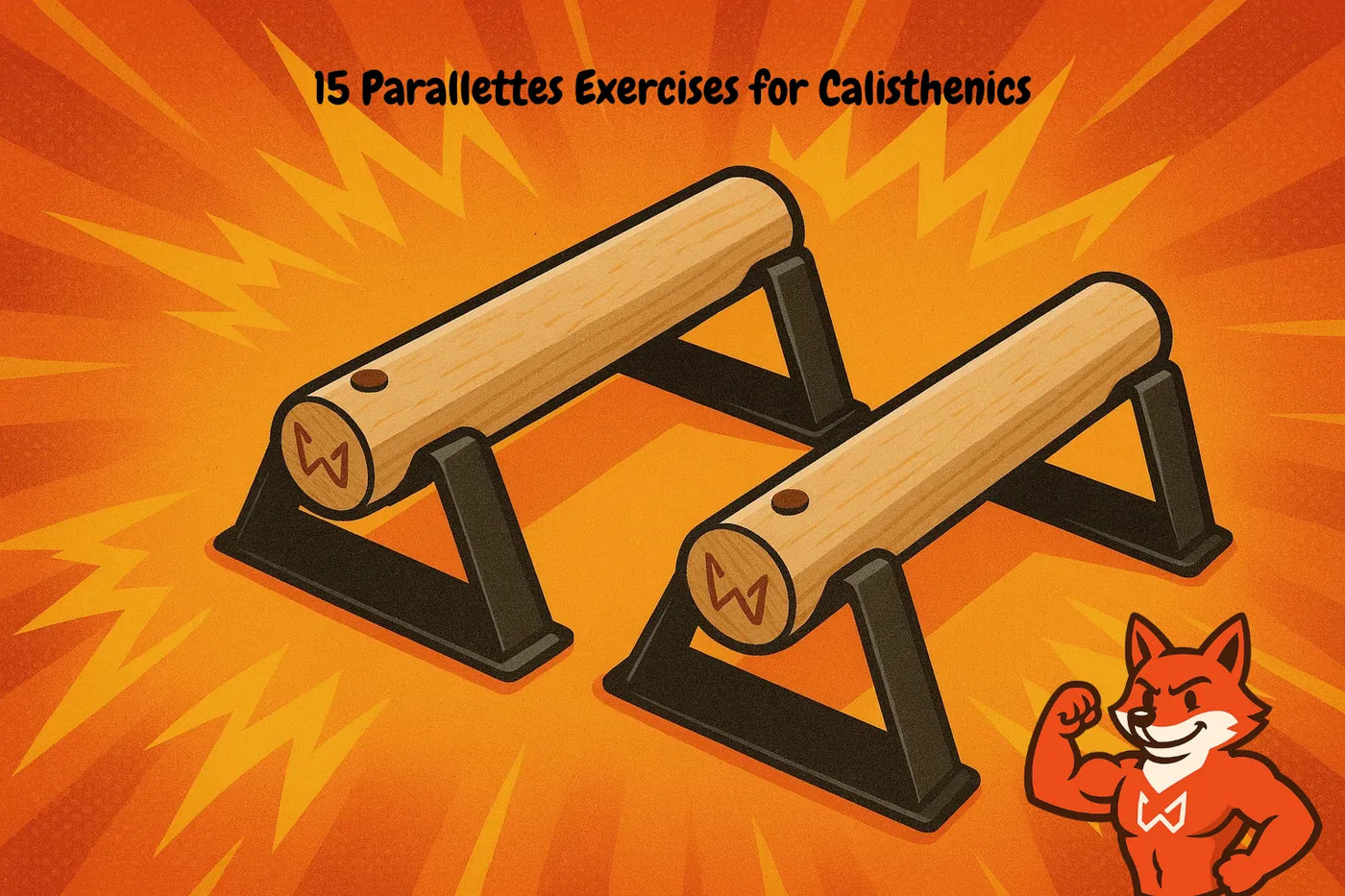
Parallettes of wild dynamics in comic style

15 Parallettes Exercises for Calisthenics (Beginner to Advanced)

, by Wild Dynamics Team, 13 min reading time


Most people only use parallettes for push-ups. That's a huge mistake.

A quality set unlocks stronger wrists, deeper pressing strength, rock-solid L-sits, handstand progress, and even planche work. In this guide you'll discover the 15 best parallettes exercises, from beginner foundations to elite-level skills.

Ready to train smarter? Start with the Wild Dynamics Calisthenics Test to find your level, then grab stable, lightweight Antlettes.


Why train on parallettes

Parallettes give you a neutral grip and elevated platform that the floor simply can't match. This means less wrist stress, greater range of motion, and better carry-over to advanced calisthenics skills like handstands and planche.

  • Wrist comfort — neutral handle reduces extension strain.
  • Greater range — deeper presses and stronger shoulder positioning.
  • Balance & control — excellent prep for floor skills and handstands.
  • Portable setup — perfect for home, park, or travel.

Beginner

Beginner parallettes exercises

These build alignment, scapular control, and basic tension. Master them first. Full beginner parallettes guide here.

01

1. Standard Push-Up on Parallettes

Beginner Chest · Shoulders · Triceps · Core Building pressing foundation
Keep elbows close to your body and press with full control.
Standard push up start on parallettes Standard push up finish on parallettes
02

2. Narrow Push-Up

Beginner Triceps · Chest · Shoulders Tricep emphasis
Hands closer together under the chest line. Smooth tempo.
Narrow push up start on parallettes Narrow push up finish
03

3. Wide Push-Up

Beginner Chest · Front Delts Chest development
Wider hand placement shifts focus to the chest.
Wide push up position on parallettes
04

4. Pike Push-Up

Beginner → Intermediate Shoulders · Triceps · Upper Chest Handstand push-up progression
Progressions: Feet on floor (beginner) → feet elevated (intermediate) → deficit pike (advanced). Keep feet together.
Pike push up start on parallettes Pike push up finish on parallettes
05

5. Mountain Climber

Beginner Core · Hip Flexors · Shoulders Cardio + core conditioning
Drive knees forward rhythmically while keeping hips stable. Aim for 30+ seconds.
Mountain climber on parallettes

Intermediate

Intermediate parallettes exercises

Build unilateral control, longer levers, and stronger hollow-body positions.

06

6. Archer Push-Up

Intermediate Chest · Shoulders · Triceps · Core Unilateral pressing strength
Shift weight to one side while keeping the opposite arm straight.
Archer push up start Archer push up finish
07

7. Crow Position (Crow Pose)

Intermediate Core · Shoulders · Wrists Balance & wrist strength
Elbows over knees, shift forward until feet lift. Use a pillow for safety.
Crow position start on parallettes Crow position end on parallettes
08

8. L-Sit

Intermediate Core · Hip Flexors · Triceps · Shoulders Static core strength
Shoulders depressed, legs straight and toes pointed. Start tucked if needed. More core exercises on parallettes →
L sit on parallettes Male L sit on parallettes
09

9. Tuck Planche

Intermediate Shoulders · Chest · Core · Scapular Muscles Planche foundation
Strong protraction, elbows locked, knees close to chest.
Tuck planche hold on parallettes
10

10. Supinated Push-Up

Intermediate Chest · Biceps · Forearms Forearm mobility + pressing variation
Fingers pointing back. Lean forward slightly for extra challenge.
Supinated push up start Supinated push up finish

Advanced

Advanced parallettes exercises

These demand patience, time under tension, and pristine form. Advanced parallettes exercises guide →

11

11. Handstand Hold on Parallettes

Advanced Shoulders · Core · Wrists · Scapular Stabilizers Balance & overhead strength
Neutral grip is wrist-friendly. Start against the wall for balance practice. See our full parallettes buying guide.
Handstand hold on parallettes
12

12. Planche Lean

Advanced Shoulders · Chest · Core · Scapular Muscles Planche progression
Lean forward until shoulders load fully. Maintain strong protraction and locked elbows. Reset if form breaks.
Planche lean on parallettes
13

13. One Arm Handstand

Advanced / Elite Shoulders · Core · Full Body Balance Extreme balance mastery
Elevate shoulders, lean slightly to the side, and keep full-body tension. Build a solid two-arm hold (minimum 60 seconds) first.
One arm handstand on parallettes
14

14. Straddle Planche

Advanced Shoulders · Chest · Core · Hip Flexors Planche strength development
Wide leg position shortens the lever. Keep scapula protracted, arms straight, and toes pointed. Warm up thoroughly.
Straddle planche on parallettes
15

15. Full Planche

Elite Shoulders · Chest · Core · Scapular Muscles Ultimate calisthenics strength
The pinnacle skill. Progress through tuck → advanced tuck → single leg → straddle → full. Maintain protraction and a clean body line.
Full planche on parallettes

Ready to train properly on stable parallettes?

Many low-quality bars become unstable under load. Wild Dynamics Antlettes are built for real calisthenics progress with excellent grip and rigidity.

Shop Antlettes Now →

Why Athletes Choose Antlettes

  • Lightweight and compact for travel
  • Stable rubber feet that grip any surface
  • Thick, comfortable grip diameter
  • Designed in Europe for serious training
  • 4.9★ rated by customers • Ships across Europe

Example parallettes workout routine

Beginner — 3 rounds 20s Crow Hold
10 Standard Push-Ups
20 Mountain Climbers (each side)
Intermediate — 3 rounds 6 Archer Push-Ups (per side)
20s L-Sit Hold
8 Pike Push-Ups
Advanced — 3 rounds 15s Straddle Planche Hold
5 Planche Leans (10s each)
20 Wide Push-Ups

Use resistance bands for assistance, liquid chalk for grip, and wrist wraps if needed.


Best Parallettes Exercises by Goal

Choose the right moves based on what you want to improve.

For Chest

  • Wide Push-Up
  • Archer Push-Up
  • Standard Push-Up (deeper ROM)

For Core

  • L-Sit
  • Mountain Climber
  • Tuck Planche

For Skills & Balance

  • Crow Position
  • Handstand Hold
  • Planche Lean / Full Planche

Common Parallettes Training Mistakes

  • Flaring elbows during push-ups (puts shoulders at risk)
  • Collapsing shoulders or shrugging in L-sits and planche work
  • Skipping wrist and shoulder warm-ups
  • Progressing to full planche too quickly without solid tuck strength
  • Using cheap, unstable parallettes that wobble or slide

Why Use Parallettes Instead of Floor Push-Ups?

Aspect Floor Push-Ups Parallettes
Range of Motion Limited by floor Deeper, fuller ROM
Wrist Position Extended (higher stress) Neutral (more comfortable)
Handstand Setup Harder wrist angle Easier grip & balance
Exercise Variety Basic pressing Push + static holds (L-sit, planche, crow)
Wrist Pain Risk Higher for many Significantly reduced

Parallettes simply offer more options and better long-term joint health. Build your own setup here.


FAQ

Are parallettes better than push-up bars?
Yes for most people. Parallettes are taller, more stable, and allow advanced skills like L-sits, planche, and handstands. Push-up bars are cheaper but limited in height and versatility.
Can parallettes build chest?
Absolutely. Wide and standard push-up variations on parallettes allow deeper range, leading to better chest activation than floor push-ups.
Are parallettes worth it?
Yes — especially if you want wrist comfort, deeper pressing strength, and access to skills like handstands and planche. They last years and travel easily.
What muscles do parallettes train?
Primarily chest, shoulders, triceps, core, and scapular stabilizers. Static holds also heavily engage the abs, hip flexors, and wrists.
Can beginners use parallettes?
Yes. They're often more joint-friendly than the floor and help beginners learn proper alignment early.
Do parallettes help with wrist pain?
They frequently do. The neutral grip reduces extreme wrist extension, making them a great option for people with wrist discomfort on the floor.
How high should my parallettes be?
10–15 cm is ideal for most training — stable yet enough elevation for deeper ROM and skill work.
How often should I train on parallettes?
Two to four sessions per week works well for most. Build volume slowly so wrists and tendons adapt.
Do I need to warm up first?
Yes. Do wrist circles, scapular push-ups and light pike presses to prime shoulders and core.

Conclusion

Parallettes deliver better positions, safer wrists, and faster progress toward impressive calisthenics skills. Train with patience, focus on form, and build progressively.

Build your own setup or start with the Antlettes — minimalist, stable, and made for real training.

Athletes in the pictures @oliva.sw @criss_workout


Blog posts

Login

Forgot your password?

Don't have an account yet?
Create account