
Introduction
When starting with parallettes, it's common to feel overwhelmed by advanced movements. However, it's vital to develop control, stability, and proper positioning first. Mastering these basic skills sets the stage for success in more complex exercises.
Why Beginners Should Start With Basic Parallettes Skills
Many beginners want to jump straight into impressive skills like L-sits or handstands. They often think holding difficult positions is enough. In reality, this approach usually leads to poor form and slow progress. Real success on parallettes comes from building strong fundamentals first. Focus on control, shoulder stability, and body awareness before chasing advanced moves. Parallettes are excellent for this because they give you instant feedback. If your shoulders sag, your hips rise, or your lower back arches, you feel it right away. This helps you fix alignment issues early and develop clean movement patterns.
By establishing proper technique from the beginning, you create a solid base for more advanced exercises like push-ups, L sits, and handstands. Furthermore, incorporating basic skills makes your training safer and more efficient. If you're interested in enhancing your training experience, be sure to explore our collection of calisthenics equipment, including gymnastic rings and wrist wraps. You may also want to read our comparison: Parallettes vs Gymnastic Rings: Which is Better for Calisthenics.
The First 5 Parallettes Skills to Learn
Plank on Parallettes
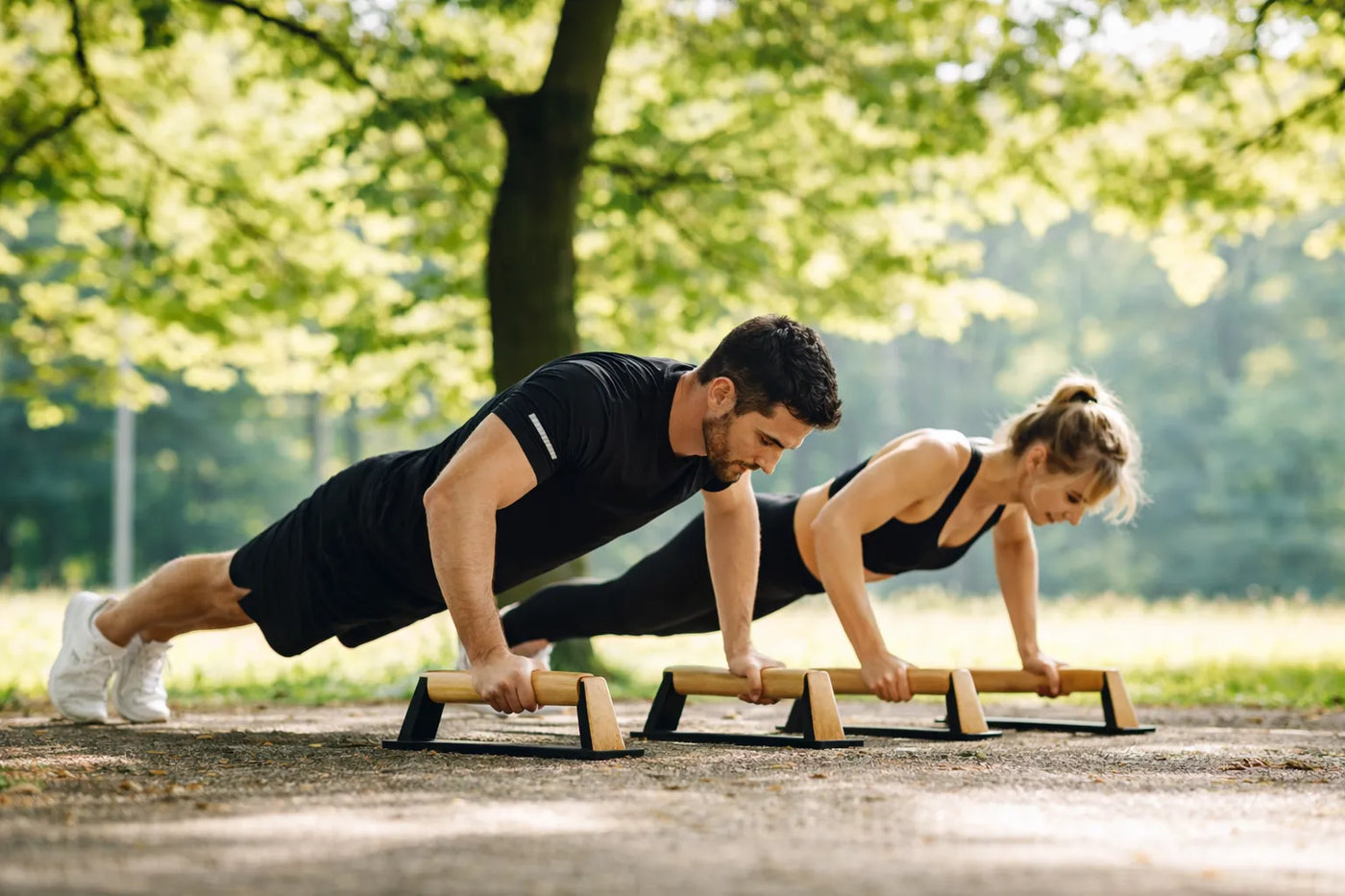
The plank on parallettes is one of the best first skills for beginners because it teaches full body tension, shoulder stability, and proper alignment. It may look simple, but it builds the kind of control that carries over into almost every other exercise on parallettes. Grip the bars firmly and keep your body in a neutral position from shoulders to heels. Do not arch the lower back and do not lift the hips too high. The goal is to stay straight and controlled while keeping tension through the abs, glutes, and shoulders.
To make it more difficult, try scapula push-ups in the plank position. Keep the arms straight and move slightly up and down through the shoulder blades without bending the elbows. This is a very effective way to build shoulder control early on.

Tuck Hold
Once the plank feels more stable, the tuck hold is a natural next step. In this skill, you support your body on the bars while keeping your knees tucked close to your chest. The tuck hold increases the demand on the core and teaches you how to compress the body while still pressing strongly through the arms. It also helps you understand how to create tension without losing balance. At the beginning, even a few seconds can feel hard. That is normal. Focus on lifting the knees high, staying tight through the midsection, and keeping the shoulders active instead of collapsing down.

L Sit Progression
The L sit is one of the most well-known parallettes skills, but beginners should not feel like they need to force the full version right away. It is much better to treat it as a progression. Start with a tucked variation where the knees stay close to the chest. From there, try extending one leg while keeping the other bent. Over time, work toward extending both legs. This progression builds hip flexor strength, abdominal compression, and stronger shoulder support. It is also one of the clearest examples of how a simple beginner progression can eventually turn into a proper skill.

Push Ups on Parallettes
Push-ups on parallettes are not just a basic strength exercise; they are one of the first movement skills beginners should learn because they teach control through a full range of motion. The bars allow you to lower deeper than during floor push-ups, which helps improve strength and awareness in the chest, shoulders, and core. At the same time, they challenge you to stay stable on the bars and keep the whole body aligned. Keep your body straight, lower with control, and avoid arching the lower back. Learning clean push-ups early makes many other parallettes exercises easier later on.
Learn more about proper technique, benefits, and progressions in our dedicated guide: Push-Ups on Parallettes: Technique, Benefits & Progressions.

Check our Wild Parallettes for a versatile training experience.
Handstand Kick Up Practice
A full handstand usually comes later, but basic kick-up practice can still be introduced early in a controlled way. It is a good way to start getting comfortable with shifting bodyweight into the hands. The goal is not to hold a free handstand right away. The goal is to learn how to enter the position safely and feel more confident upside down. Most beginners should start against a wall. Using parallettes for handstand practice often feels better on the wrists, and the bars also make it easier to grip and make small balance adjustments. Keep the arms straight, shoulders active, and body tight as you practice.

How to Practice These Skills as a Beginner
The best way to practice beginner skills is to keep things simple. You do not need a long complicated routine. In most cases, choosing two or three skills per session is enough. For example, you could start with planks on parallettes, then move into tuck holds, and finish with L sit progressions. On another day, you could practice push-ups and handstand kick-ups against a wall. The main thing is consistency. Short sessions done regularly are usually much more effective than long sessions where your form starts to fall apart. Good skill practice is about quality, not just volume.
Common Mistakes When Learning Beginner Skills
One common mistake is rushing into hard variations too early. A lot of people want to skip straight to full L sits or free handstands, but that usually leads to poor technique and frustration. Another mistake is losing body position. In movements like planks or push-ups, many beginners either arch the lower back or lift the hips too high. Both make the position less effective and reduce the benefit of the exercise. It is also common to relax the shoulders too much. On parallettes, the shoulders usually need to stay active and stable instead of sinking down into the joints. And finally, many beginners stop breathing when a skill gets hard. Staying calm and breathing normally often improves control more than people expect.
How to Progress After These First Skills
Once these five skills start to feel more stable, progress becomes much easier to plan. You can increase hold times, improve body position, and move into harder variations step by step. A stronger plank helps with push-ups and shoulder control. A stronger tuck hold makes L sit progressions easier. Better push-ups improve overall pressing strength. More confidence with handstand kick-ups makes future balance work much less intimidating. This is why the first skills matter so much. Each one supports the next, and together they build a strong base for later training. For additional ideas, see our 15 Parallettes Exercises.
FAQ
Start With the Basics and Build From There
The first skills you learn on parallettes do not need to look advanced to be valuable. In fact, the simple ones are often the most important because they teach control, stability, and body awareness from the start. If you build a good base with planks, tuck holds, L sit progressions, clean push-ups, and basic handstand practice, everything that comes later will feel more natural. That foundation is what makes long-term progress possible.
Conclusion


