
Introduction
Once the basic exercises on parallettes start to feel comfortable, many athletes look for more challenging movements to continue building strength. Advanced parallettes exercises demand greater control, stronger shoulders, and a well developed core.
Unlike beginner movements such as push ups or planks, advanced exercises require the body to stay stable while supporting more bodyweight through the arms. This type of training develops the strength needed for many calisthenics skills.
When Are You Ready for Advanced Parallettes Exercises
Before attempting more difficult movements, it is important to build a solid foundation with basic exercises: multiple sets of push ups on parallettes, plank holds with strong core tension, and L sit holds for at least 15 to 20 seconds. These movements help develop the shoulder stability and core strength required for more advanced skills. Progressing too quickly often leads to poor technique or unnecessary strain on the shoulders and wrists.
If you’re still building your foundation, start with our Calisthenics for Beginners Guide.
Best Advanced Parallettes Exercises
Tuck Planche

The tuck planche is often the first step toward learning the full planche. Place your hands on the parallettes and lean your shoulders forward while lifting your feet off the ground. Keep your knees tucked close to your chest and try to hold your body in the air. This exercise places significant demand on the shoulders and core. Even short holds of a few seconds can be very challenging.
Handstand on Parallettes

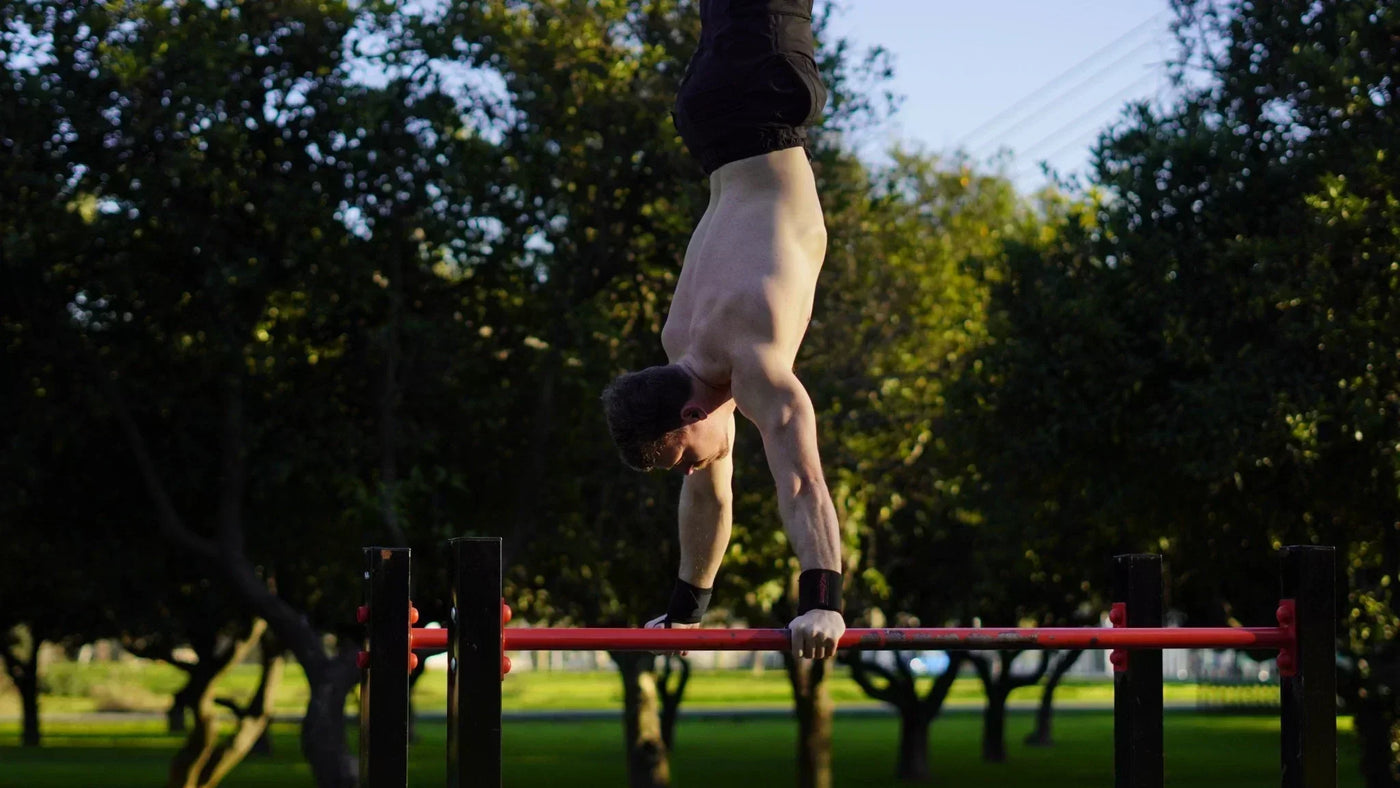
Handstands are one of the most popular skills practiced with parallettes. The bars allow a more comfortable grip and provide extra space for balance adjustments. Kick up into a handstand while keeping your arms straight and shoulders active. Your body should stay aligned from hands to feet. Practicing against a wall can help beginners develop confidence. If you feel pain in your wrists during handstand practice, consider using wrist wraps for extra support.
L Sit to Handstand

This exercise combines core strength with shoulder stability. Start in an L sit position and gradually shift your shoulders forward while lifting your hips upward. The goal is to transition from the L sit into a handstand position. This movement requires strong compression strength and good balance. For more core-focused training, see our Parallettes Core Exercises guide.
Pseudo Planche Push Ups

Pseudo planche push ups increase the difficulty of regular push ups by shifting the bodyweight forward. Place your hands on the parallettes and lean your shoulders slightly ahead of your wrists. From this position perform push ups while keeping your body aligned. This variation builds the shoulder strength necessary for planche progressions.
Bent Arm Planche

The bent arm planche is a challenging strength movement where the elbows stay close to the sides of the body while supporting the body horizontally. Lean forward on the parallettes and bend the arms slightly while keeping your body straight and your feet together. Keep a neutral head position, point your toes, and squeeze the elbows against the upper body to create stronger tension.
Example Advanced Parallettes Workout
A challenging sequence can combine multiple movements together:
- Handstand hold
- Tuck planche
- L sit
- Pseudo planche push ups
Move through the sequence with control and rest about 90 seconds between rounds. For a solid foundation before attempting this workout, follow our Beginner Parallettes Workout.
Common Mistakes When Training Advanced Skills
One common mistake is attempting difficult skills before developing the required strength. Movements like planche variations or handstands require strong shoulders and stable core engagement. Another mistake is rushing through exercises. Advanced movements should always be performed slowly and with control. Many athletes also neglect proper warm up before training. Preparing the wrists and shoulders is especially important when working with parallettes.
How to Progress Advanced Parallettes Training
Progressing in advanced calisthenics exercises usually takes time and patience. Small improvements in hold time, balance, and body control add up over time. Practicing consistently and focusing on clean technique will lead to better results than attempting difficult variations too quickly.
FAQ
Are parallettes good for advanced calisthenics training?
Yes. Many advanced calisthenics skills such as planche progressions and handstands are commonly practiced on parallettes.
Are advanced parallettes exercises suitable for beginners?
Most advanced exercises require a strong foundation first. Beginners should focus on basic movements before attempting more difficult skills.
Do parallettes help improve balance?
Yes. Because your hands are gripping narrow bars, parallettes require greater shoulder stability and balance control.
How often should advanced athletes train on parallettes?
Many athletes train three to four times per week, depending on recovery and overall training volume.
Building Strength With Advanced Parallettes Exercises
Advanced parallettes exercises challenge both strength and balance, making them a valuable part of calisthenics training. By gradually progressing through these movements, athletes can develop the shoulder strength, core stability, and control required for more complex bodyweight skills.


