
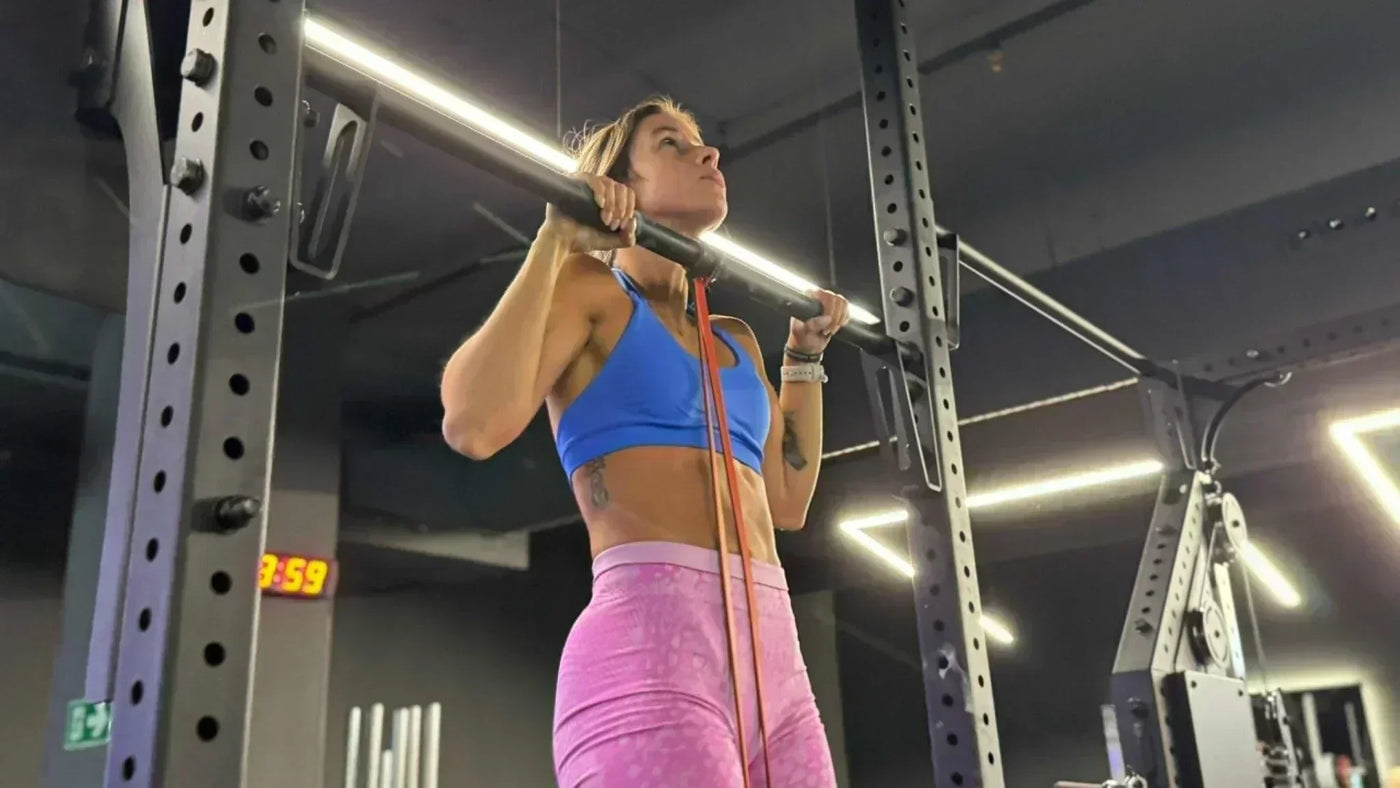
8-Week Beginner Pull-Up Progression Schema
This structure keeps overload gradual while protecting elbows and shoulders. Each two-week block has one clear focus. Complete it before moving on.
Bar hangs & scapula pulls: build grip and shoulder control from day one
Australian rows & slow eccentric pull-ups: load the lats safely
Banded pull-ups with controlled tempo and full range of motion
First strict pull-up attempts: low volume, quality form, full hang

Why the Pull-Up is Worth the Effort
The pull-up trains your lats, upper back, biceps, forearms, and core simultaneously. No machine can replicate that full-body neuromuscular demand. It builds transferable strength for climbing, rowing, and everyday posture correction.
- Builds strong lats and biceps with bodyweight only, no gym required
- Improves posture through scapula retraction and tension awareness
- Infinitely scalable with bands, rings, tempo, or angle adjustments
- Pairs with push progressions for balanced pulling and pushing across the week
Before You Start: Safe Setup Checklist
- Warm up for 6 minutes focusing on shoulders, elbows, and wrists. Use the full warm-up guide.
- Grip help: a light application of chalk eliminates slip and lets you focus on muscle engagement. Try Wild Grip liquid chalk.
- Assistance band, lets you adjust intensity and train the full movement pattern from day one. Learn which size in the bands guide.
- Bar height, you must be able to hang freely with arms fully extended and feet clear of the ground.

Strict Pull-Up Technique: 5 Coaching Cues
Engrain these five cues before adding any volume. One clean rep beats ten sloppy ones every time.
-
Grip at shoulder width. Overhand, hands just outside the shoulders, not too wide, not close-grip.
-
Active hang. Retract and depress the shoulder blades before pulling. Never shrug. This is your foundation.
-
Pull elbows to ribs. Keep elbows slightly tucked, never flared wide. Think about driving your elbows down and back.
-
Chin clears the bar. Full contraction. If the chin doesn't pass the bar, the rep doesn't count.
-
Slow descent to dead hang. The lowering phase builds as much strength as the pull. Don't drop. Own it.
| Problem | Fix |
|---|---|
| Elbows flaring wide | Rotate forearms slightly inward; think "elbows to ribs" |
| Legs swinging | Squeeze glutes, brace the core, cross ankles behind you |
| Can't pull from dead hang | Hit 3×12 smooth scapula pulls first, then retry |
| Neck craning at the top | Keep neutral spine, chin over bar is about pulling, not reaching |
The 5-Step Beginner Pull-Up Progression
Bar Hang & Scapula Pulls
Goal: 3 sets of 30 to 45 s hang with calm breathing + 8 to 12 scapula pulls. Retract the shoulder blades at the top of each rep, hold briefly, then return. This builds proper scapular control and tendon capacity. This is the non-negotiable base.
Australian Rows
Set a low bar or rings at hip height. Keep a rigid plank body line, pause 1 second at the top, and lower under control. Rings are ideal here. They rotate naturally with your wrists and reduce elbow stress. Consider wooden rings if you train outdoors.
Eccentric-Only Pull-Ups
Use a box or jump to start with your chin above the bar. Lower for 4 to 6 seconds under full control to a dead hang. Even 2 to 3 quality negatives per session produce outsized strength gains for beginners.
Banded Pull-Ups
Loop a resistance band over the bar and step or kneel into it. Keep every rep controlled, no swinging. When 8 clean reps feel easy, step down to a thinner band. Browse band sizes in the equipment collection.
First Full Rep
Start from a fully active hang. Pull elbows to ribs, keep them tucked, finish with chin clearly above the bar, then lower slowly all the way. Avoid dropping suddenly at the bottom: control the final part of the descent to reduce unnecessary stress on the elbows and shoulders.


Two-Day Beginner Program (6 Weeks)
Alternate Day A and Day B three times per week. Keep at least one rest day between sessions. Add light core work (hollow holds, dead bugs) after each session.
- Warm up for 6 minutes (shoulders, elbows, wrists)
- Bar hang: 3 x 45 s, calm breathing
- Scapula pulls, 3 × 12 with a 1 s pause at top
- Australian rows, 4 × 12, straight body line
- Eccentric pull-ups, 3 × 5, 5 s descent
- Band pull-aparts, 2 × 15 for rotator cuff prep
- Banded pull-ups, 4 x 8, controlled tempo
- Ring rows, 4 × 10, tuck rings at the chest
- Active hang shrugs, 3 × 12 with a 2 s hold
- Tempo negatives, 2 x 3, 6 s descent each
Track Your Milestones
Tick each milestone as you hit it. When all five feel solid, take the Calisthenics Level Test.
Bar Hang
3 × 45 s, calm breathing, no shoulder shrug
Scapula Pulls
3 × 12 smooth with a 1 s pause at top
Australian Rows
4 × 12 clean, feet elevated angle
Eccentric Pull-Ups
4 × 5 controlled, 6 s descent
Banded Pull-Ups
4 × 6 with thin band, full hang to chin-over
Accessory Work That Accelerates Progress
- Grip: add dead hang sets with a towel or varied grip width to build general pulling capacity
- Biceps: ring curls for 3 × 10 to 12, which forces strict form
- Scapula stability: prone Y/T raises with slow control
- Core: hollow body holds building from 15 s toward 30 s unbroken
Stuck? Fix Your Sticking Point
Can't pull from dead hang?
Your scapula initiation is weak. Return to scapula pulls: 4 × 12 with a deliberate 2-second retraction hold at the top. Once those feel effortless, retry the pull-up from dead hang.
Stalling mid-pull?
Add 5 to 10 second isometric holds just below your sticking point, then 2 mini-reps within that exact range. This targets the weak angle without overloading the full movement.
Can't finish with chin over bar?
Use a thinner assistance band and squeeze hard at the top for 1 to 2 seconds on each rep. Don't crane the neck, the chin-over position comes from pulling strength, not head position.
- Train pull-ups fresh, always near the start of a session, never fatigued
- Film one working set each week and review elbow path and body position
- Sleep and protein matter as much as training volume, take them seriously
- Deload every 4th week: cut volume by 40% to let joints and tendons recover
Minimal Gear, Maximum Results
You need very little, but the right tools make a real difference to comfort, grip, and progress.
Assistance & tempo control
Rows, neutral pulls & ring curls
Better grip outdoors
Wrist stability during pulling work
Training outside? See ideas for portable calisthenics setups that fit in a backpack.
After Your First Pull-Up: What's Next?
Build from one to five strict reps by adding one or two small sets per week. Never chase volume at the expense of form. Also check the first month of calisthenics blog for a broader context on where pull-up strength fits in your overall development.
→ Next step: increase pull strengthWhat Beginners Should Avoid
Knowing what not to do accelerates progress as much as knowing what to do. These are the most common mistakes that stall beginners or cause injury.
- Training pull-ups every day. Tendons and connective tissue need 48 hours to recover. Training daily without rest is one of the fastest ways to develop elbow pain.
- Using momentum before mastering control. Swinging and kipping feel productive but bypass the muscles you are trying to build. Build control and pulling strength first. Add speed later.
- Skipping scapula work and jumping straight to banded reps. Without scapular control, you cannot initiate the pull correctly. Scapula pulls are not optional at this stage.
- Half reps with no return to a full hang. Partial range of motion builds partial strength. Always return to a full dead hang at the bottom of every rep.
- Continuing to train through elbow pain. Discomfort during a set is a signal. Pain is a stop sign. Rest, reduce volume, and address the cause before continuing.
Frequently Asked Questions
How many days a week should I train pull-ups?
Two or three non-consecutive days is ideal for most beginners. Elbows and tendons need 48 hours of recovery between pulling sessions to adapt and avoid overuse injury.
Are chin-ups easier than pull-ups for beginners?
Yes. The supinated (underhand) grip recruits more biceps, which are typically stronger than the lats alone in untrained individuals. Most people find chin-ups noticeably easier on their first attempt.
Should I do kipping pull-ups?
No, not while building base strength. Kipping shifts load from the target muscles to the joints, increases injury risk at low strength levels, and builds bad movement habits. Master strict reps first.
How long will it take to do my first pull-up?
Most people achieve their first strict rep within 6 to 10 weeks of consistent practice, assuming adequate sleep, protein intake, and 2 to 3 sessions per week.
Do I need gymnastic rings?
No, rings are optional but genuinely helpful. They rotate naturally with your wrists, reduce elbow stress during rows, and add variety. Particularly valuable if you have sensitive wrists or shoulders.
What should I do if my hands tear?
File calluses lightly each week to keep them even, moisturize after sessions, and use chalk to reduce friction during training. Wrist wraps can also protect the skin during high-volume sessions.
Does body weight affect pull-up progress?
Yes, pull-ups are relative-strength movements. A small calorie deficit combined with high protein intake can accelerate progress, especially when paired with gentle daily activity like walking.
You've got this. Keep reps clean and let small wins compound every week.


