
Why start with a structured routine
Random workouts give random results. A simple structure lets you repeat quality practice and track what improves. You keep the same five movements for a month, record sets and reps, and progress only when positions stay consistent. This is how beginners avoid plateaus and avoid common tendon irritation.
If you want more context around the learning curve, skim our Calisthenics for beginners guide, then check how many sessions fit your week in How many days to train calisthenics. Then come back here and apply it.
The 5 key exercises
Each movement below has one main job. Keep form clean, use assistance when needed, and aim for smooth sets of 6 to 12 reps. Stop one or two reps before technique breaks.
1. Incline or knee push up
Focus: push pattern foundation, shoulder stability, full range. Elevate your hands on a bench, box, or wall so you can keep ribs down and a steady body line. Lower under control, touch softly, and press to lockout without shrugging.
- Common cues: hands under shoulders, glutes on, ribs down.
- Goal: 3 to 4 sets of 8 to 12 crisp reps.
- Progress: lower the incline over time or move to floor push ups.
When your push ups are stable, you can explore progressions in normal to explosive push ups.
2. Ring row or table row
Focus: horizontal pull and scapular control. Set rings or a sturdy edge at hip height. Keep a straight line from head to heel. Pull by driving elbows to your sides while your shoulder blades glide back and down, then return with control.
- Common cues: long neck, chest proud but ribs in, squeeze at the top.
- Goal: 3 to 4 sets of 6 to 10 clean reps.
- Progress: lower your body angle or pause one second at the top.
For more pulling ideas, see increasing pull strength in calisthenics.
3. Hollow body hold
Focus: core alignment and midline tension. Lie on your back, press your lower ribs toward the floor, lift shoulder blades and heels slightly, and breathe under control. Start tucked if needed. The key rule is simple: your lower back stays down.
- Common cues: ribs down, glutes lightly on, breathe behind the brace.
- Goal: 3 to 4 sets of 15 to 30 seconds.
- Progress: tuck to one leg out, then both legs long.
4. Assisted pull up or band pull
Focus: vertical pull pattern, range control, shoulder depression. Use a band or foot assist to practise full range without swinging. Think chest up, ribs in, and pull elbows down. Pause softly at the top and lower with control.

Not sure how to scale band tension? Read the ultimate guide to bands.
- Common cues: shoulders down, no leg kick, smooth elbow path.
- Goal: 3 to 5 sets of 4 to 8 controlled reps.
- Progress: lighter band, then negatives, then unassisted.
5. Parallel support or dip support hold
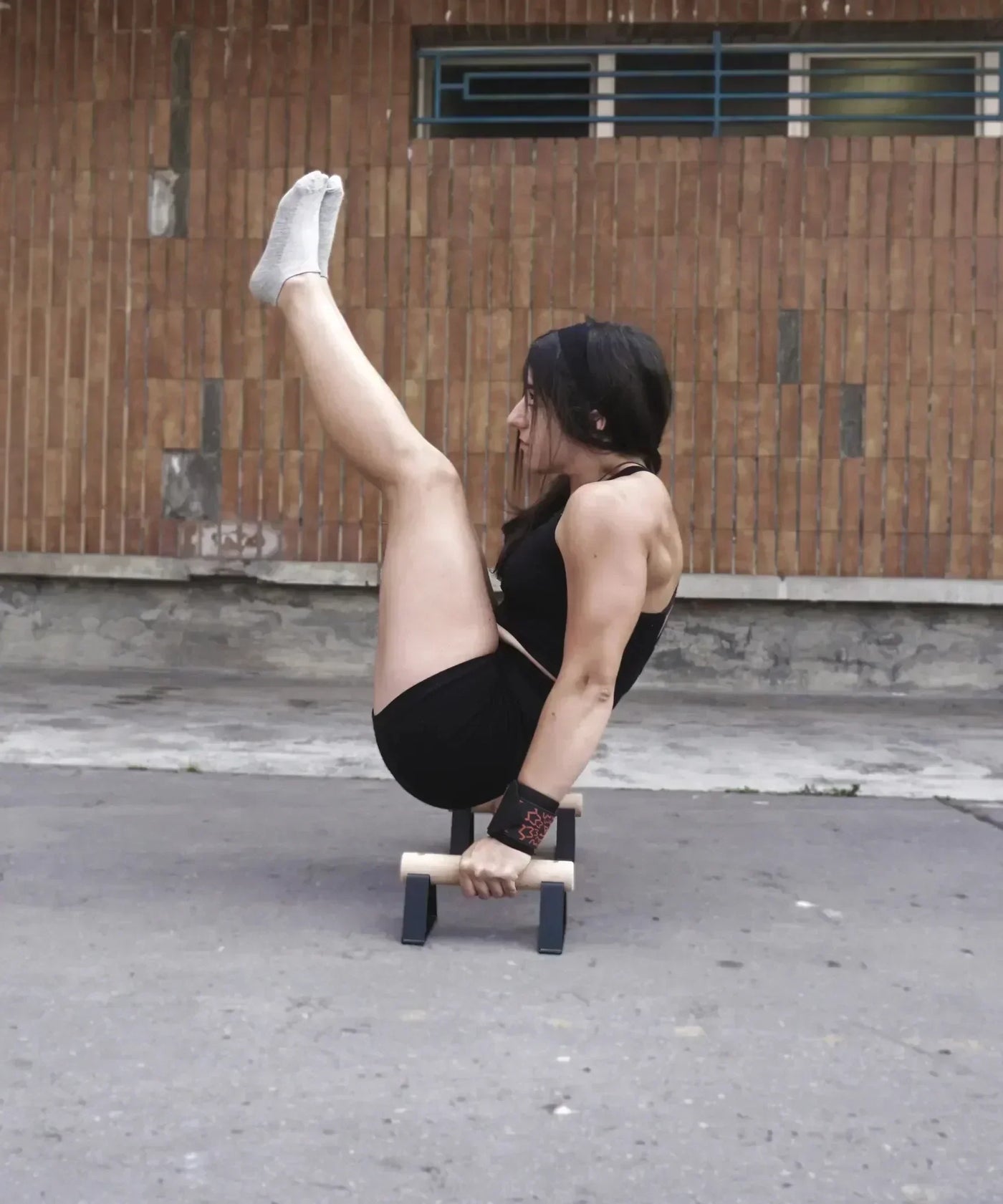
Focus: scapular depression, shoulder stability, base for dips. Support on parallel bars or rings with elbows locked, shoulders pressed down, and ribs stacked. Keep the body quiet. Add time slowly.

Want more floor based practice ideas? Use 15 parallette exercises as extra inspiration.
- Common cues: push tall, neck long, no shrugging.
- Goal: 3 to 5 sets of 10 to 30 seconds.
- Progress: add time or practise slow support transitions.
Example weekly schedule
Train two or three days per week and repeat the same structure for four weeks. Leave one or two reps in reserve. If quality drops, cut next session volume slightly and rebuild. If you are unsure about frequency, see how many days to train calisthenics.
| Session | Main work | Accessory | Notes |
|---|---|---|---|
| A | Incline push up 4 x 8 to 12 Ring row 4 x 6 to 10 |
Hollow hold 3 x 20 sec | Warm up first. Stop with clean reps left. |
| B | Assisted pull up 4 x 4 to 8 Support hold 4 x 15 to 25 sec |
Hollow hold 3 x 20 sec | Control the lowering phases. No swinging. |
| C (optional) | Repeat A or B at slightly lower volume | Light mobility and scapula prep | Keep this day fresh, not fatiguing. |
Common mistakes beginners make
Rushing progressions
Harder variants do not help if positions collapse. Master the easy angle first. Quality is the shortcut. For simple tools that help you scale gradually, see top calisthenics equipment.
Skipping warm up
Five minutes of band and scapula work makes every rep feel better. Use our calisthenics warm up guide as a simple template.
Inconsistent volume
Write down sets, reps, and one short form note. Repeat the plan for the month. For a broader month one roadmap, see First month of calisthenics.
Minimal gear for beginners
You can do most of this with a bench and a bar. Small tools make it smoother. A starter pack like the Calisthenics Starter Set keeps things tidy at home, and our beginners collection groups the essentials.
Prefer to pick pieces one by one? Try wrist wraps for stable push work, a simple jump rope for warm ups, and liquid chalk for steady outdoor grip.

If you like training at parks, you may also enjoy portable calisthenics equipment and our notes on choosing quality parallettes.
Next steps
Practice this plan for four weeks. When reps feel crisp and your notes show steady control, you are ready to increase difficulty slowly.
- Test your current level with the Calisthenics Level Test.
- Move into a focused goal like getting your first pull up or begin ring dip prep.
FAQ
How many times per week should I run this routine
Two or three sessions per week are enough. Keep at least one rest day between hard days so your joints and muscles adapt without getting irritated.
When should I progress to harder versions
Progress when all sets stay clean and you still have one or two reps left. Change only one thing at a time, for example a lower incline or a lighter band.
Can I mix this with gym workouts
Yes. Use this routine as your skill practice and reduce gym volume slightly so recovery stays solid. Your goal is consistent quality, not constant fatigue.
What if I have no rings
Use a sturdy table for rows and parallel bars or two stable boxes for support holds. The exact tool matters less than stable positions and controlled reps.
How long until I see results
Most beginners feel better control within two weeks and see clear strength gains by week four if they stay consistent, keep form clean and sleep enough.


