
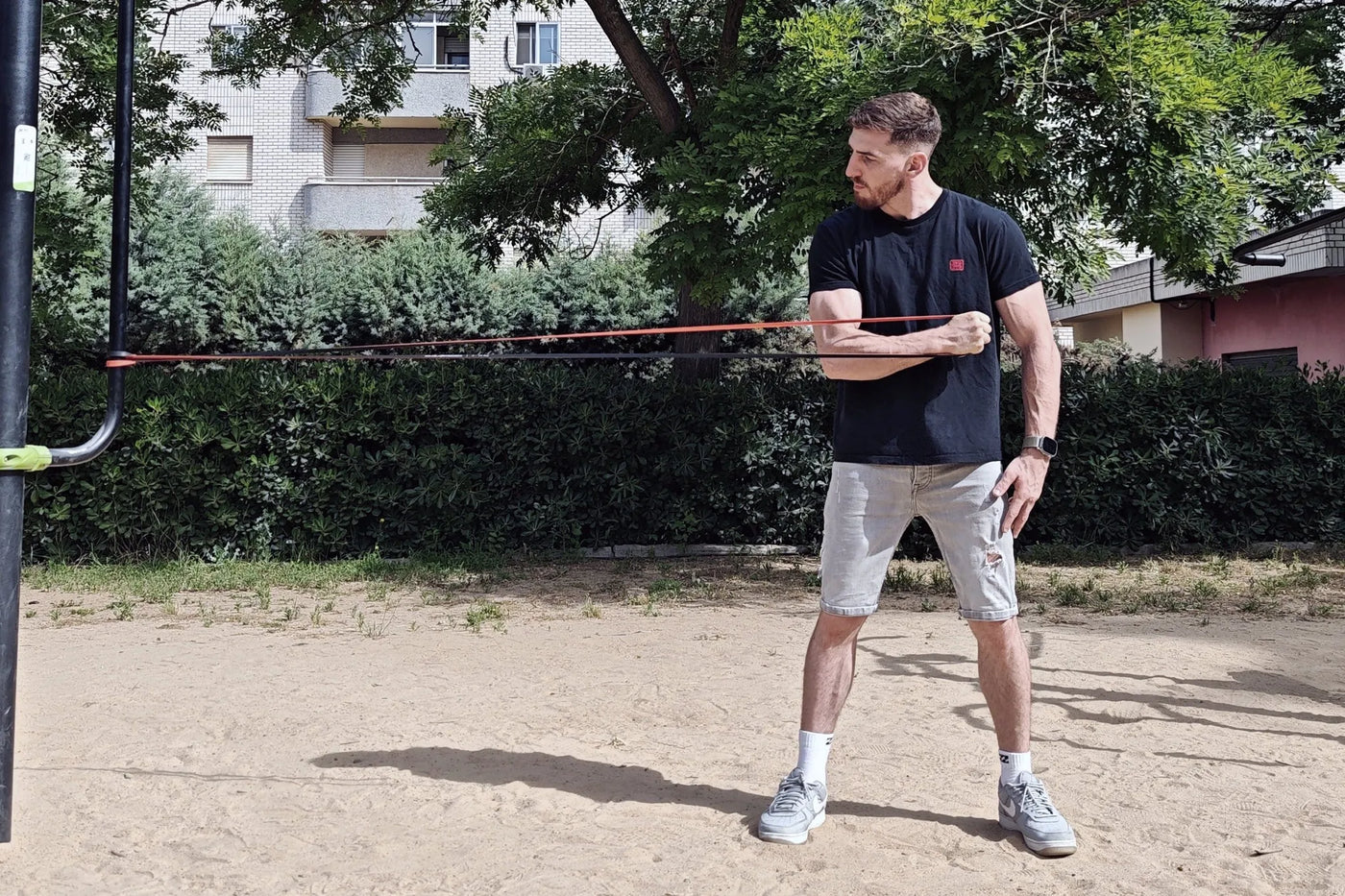
A calisthenics warm-up should take 8–12 minutes and follow three blocks: general heat (raise temperature, 2–3 min), joint prep (wrists, elbows, scapula, 3–4 min), and movement-specific activation (pattern rehearsal at low load, 3–5 min). Skip any block and you leave a joint unprepared. Keep total intensity below the fatigue threshold so your first work set feels strong.

Why warm-ups matter
Cold tissue is less elastic and slower to absorb load. A proper warm-up raises tissue temperature, fires the neural pathways that coordinate movement, and ensures technique is clean from rep one — not rep ten. Skipping it is one of the most common calisthenics mistakes for beginners.
- Raises tissue temperature and blood flow for better elasticity
- Activates scapula stabilisers, rotator cuff, forearms, and core
- Grooves pulling and pushing patterns at low stress
- Reveals tight spots before they become an in-session problem
- Improves motor unit recruitment — muscles fire harder, faster
Four warm-up principles
- General before specific. General motion first — joints, blood flow, breathing — then the exact pattern you will train.
- Small ranges before large ranges. Partial ROM protects cold elbows and shoulders from sudden load spikes.
- Stay below the fatigue threshold. If your first work set feels hard, your warm-up was too long or too intense.
- Progressive load for heavy sessions. Ramp load gradually across warm-up sets when working toward weighted or advanced skills.
The 8–12 minute warm-up template
Three blocks, each with a different purpose. If you're short on time, cut reps — never cut an entire block.
- Jump rope or light jog
- Arm circles — small to large, both directions
- Gentle neck and thoracic rotations
- Wrist rolls + palm lifts on parallettes
- Elbow flex-extend with light band
- Scapula shrugs in hang or on rings
- Band pull-aparts + external rotations
- Ring rows — short range to full range
- Active hang → first third of a strict pull-up

Shoulder activation
Use a light resistance band and move deliberately. Feel the shoulder blades glide without shrugging the traps. Breathe out on the effort, in on the return. Unsure which tension to use? Our ultimate resistance bands guide covers every thickness.

Scapula control on rings or bar
The shoulder blades are the foundation of every pulling movement. When they initiate first and stay controlled, elbows and wrists follow smoothly. Start with small range, let it grow as the movement becomes natural.

Wrist and elbow prep
Most forearm and elbow aches trace back to cold wrists or jumping to full range too fast. Slow ramps and neutral angles let the joints catch up with the muscles. If wrist discomfort persists into work sets, wrist wraps help — our hard vs soft wrist wraps guide explains the difference.

Specific prep for pull days
These three steps take about 5 minutes and bridge your general warm-up directly into pull-up or row work. Use the thinnest band that lets you move cleanly — you want activation, not assistance. For a deeper look at pulling strength progressions, see our best pull exercises for beginners.
- Dead hang, 20–30 seconds. Breathe calmly. Let the shoulders decompress and the grip settle.
- Active hang, 2 × 8 small shrugs. Arms straight. Drive shoulder blades down and together.
- Assisted pull-ups, medium band, 2 × 5. Initiate with the scapula, not the arm.

Common warm-up mistakes
| Mistake | Fix |
|---|---|
| Doing a full workout in the warm-up | Keep total warm-up time under 12 minutes. Stop before you feel the burn. |
| Skipping wrist prep on cold days | Two quick sets of palm lifts and rotations. Never skip this. |
| Rushing to full range immediately | Start partial, grow range over 2–3 sets before hitting full depth. |
| Passive scapula in hang | Add hang shrugs and short ring rows. Active hangs, not passive rest. |
| Prolonged static stretching before pulling | Save static stretches for after training. Pre-session work should be dynamic. |
Two ready-to-use warm-up plans
Same three-block logic — the short version compresses it for busy days.
- 1 min — jump rope or light jog
- Band pull-aparts 2 × 12 and external rotations 2 × 10
- Scapula shrugs in hang, 2 × 8
- Active hang 20 s → first work set
- 2 min — jump rope or jog with arm circles
- Wrist prep on parallettes — 2 × 12 palm lifts + 2 × 10 rotations
- Band series: pull-aparts, external rotations, face pulls (2 sets each)
- Ring rows — short to full range, 2 × 8
- Active hang to half pull-up, 2 × 5 with light band
Equipment that helps
You don't need much. These five cover every session type.
- Resistance bands — shoulder prep, rotations, and pull-up assistance in one tool
- Gymnastic rings — ring rows and scapula control without needing a bar
- Parallettes — neutral wrist angle for palm lifts; compact and portable
- Jump rope — fastest way to raise temperature in Block A
- Wrist wraps — post-warm-up support for high-load pressing sessions
Everything in one box: the Calisthenics Starter Set (parallettes, wrist wraps, jump rope).
Frequently asked questions
How long should a calisthenics warm-up take?
8–12 minutes is the target. On cold days or after a long rest period, trend toward 12. In warm conditions or on active recovery days, 6 minutes of focused prep is often enough. The goal is readiness, not exhaustion.
Do I need resistance bands to warm up?
Bands are not required, but they make shoulder prep more targeted. Without them, arm circles, scapula shrugs in hang, and active holds cover most of the same ground.
My wrists feel stiff — what should I do?
Add two sets of palm lifts and wrist rotations on a box or parallettes before any pressing or support work. If stiffness persists after warm-up, scale back session intensity and consider wrist wraps during work sets.
Should I do static stretching before training?
Keep static stretches short (under 20 seconds) before training. Prolonged static stretching before strength work can temporarily reduce force output. Focus on dynamic, movement-specific prep instead. Save deeper static work for after the session.
How do I know I'm ready for the first work set?
Three signals: shoulders feel warm and responsive, grip feels stable without thinking about it, and your final prep set looks like the first third of your training movement — clean, controlled, comfortable.
Can I warm up with rings if I don't have a bar?
Yes. Gymnastic rings let you do ring rows and hang shrugs that cover most pulling prep. The unstable surface forces you to stay active throughout the range.
Is this warm-up suitable for complete beginners?
Yes — it scales with your level. If any movement is uncomfortable, reduce range of motion or use an easier variation. The 6-minute plan is the best starting point. Take the Calisthenics Level Test to see exactly where you stand.
What to read next
- Get your first pull-up — step-by-step progressions from dead hang
- Best pull exercises for beginners — ranked by difficulty
- Beginner calisthenics routine — 5 foundational moves for your first sessions
- Common calisthenics mistakes — avoid the errors that slow progress
Warm up smart, train better, stay consistent. Your joints will still be working for you in ten years.


