
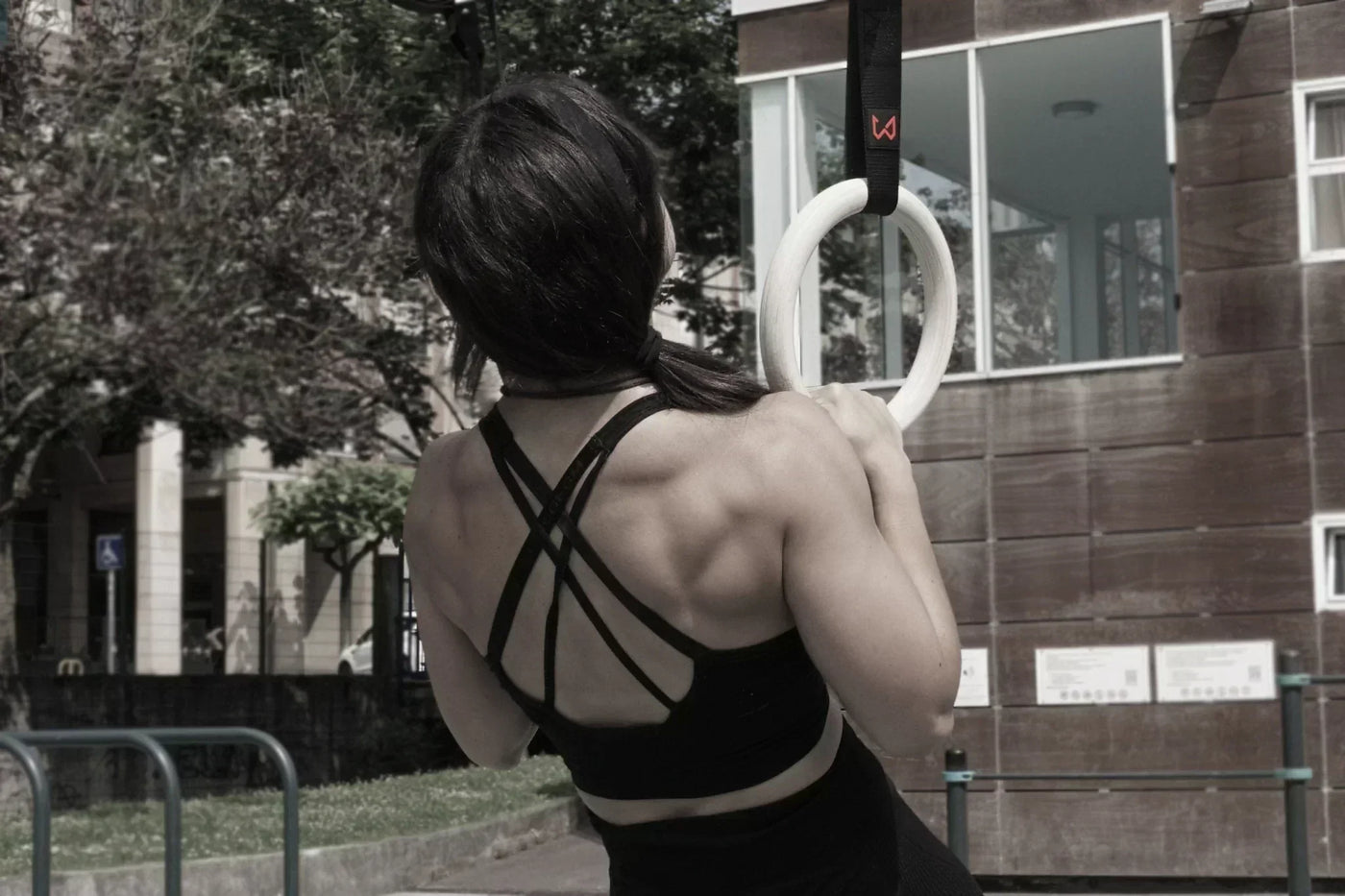
What is calisthenics
Calisthenics means training with your bodyweight through pushes, pulls, core work and leg patterns. You control leverage by changing angles, tempo, and range. It scales from complete beginner to high-level skills. The focus is on clean movement, steady progress, and long-term joint health.
Benefits you can feel
- Strength that carries over into daily life — movement feels easier and more controlled.
- Mobility from full ranges done with control.
- Body control and balance from time under tension.
- Joints learn to tolerate load safely over time.
- Low cost and flexible — train at home, a park, or a gym corner.
The combination of physical strength, body control, and mental discipline creates benefits that go far beyond muscle. Discover why calisthenics improves both body and mind →
Essential equipment that actually helps
Start simple. Add tools that improve technique and comfort, not clutter.
- Parallettes — neutral wrist grip and better control on push and L-sit work.
- Gymnastic rings — activate stabiliser muscles with joint-friendly movements at any level.
- Resistance bands — warm-ups, assisted pull-ups, and movement pattern practice.
- Liquid chalk — reliable grip for outdoor training and high-rep pulling work.
- Wrist wraps — protection for handstands, planche leans, and floor pushing.
- Dip belt — add load to dips and pull-ups once bodyweight becomes easy.

Mindset and preparation
- Pick three movements to improve over the next four weeks.
- Plan three training days you can repeat. Keep them steady.
- Log sets, reps, and how each set felt after training.
Consistency and discipline beat spikes of motivation. Train three days per week, master the basics first, and then progress to more advanced skills.
Sleep well, eat real food, and walk daily. Your body responds very positively to simple habits repeated consistently.
Not sure where you stand? Take the Calisthenics Test and build from your actual baseline.
Foundational movements
You will rotate between push, pull, core and legs. Below are clean form cues, common mistakes, and simple progressions for each pattern.
Push movements
Push exercises involve moving your body away from the floor or another object. In calisthenics there are three main directions: forward push (standard push-up), downward push (dips), and upward push (pike or handstand push-ups).
Forward push trains the chest, shoulders, and triceps in a horizontal plane. Downward push works the same muscles from a different angle, while upward push targets the shoulders and upper chest more intensely. Master the forward push first, then progress to dips and later to pike push-ups.
For a wide variety of push movements that also protect your wrists, see 15 effective parallettes exercises. Or go deeper with our push-ups on parallettes guide.
- Hands under shoulders. Core engaged. Glutes and quads squeezed.
- Elbows tucked around 45°. Forearms stay vertical at the bottom.
- Lower for two seconds, pause softly, press with control.
Common mistakes: flared elbows, hips sagging, bouncing at the bottom, racing through reps.

- Start with the standard push-up. Play with hand positions and angle changes.
- Move to dips for the downward push pattern. Add a dip belt when they feel easy.
- Add pike push-ups and wall handstand push-ups to target the shoulders and upper chest.
- Finish with plyometric push-ups — only when form and basic strength are solid. Read the Explosive Push-Ups guide first.
Pull movements
Pull exercises involve pulling your body toward a bar or rings. Vertical pulls include pull-ups and muscle-ups, while horizontal pulls (ring rows or inverted rows) keep your body more parallel to the floor. At higher levels, front lever variations challenge the entire body.
This section focuses on the foundational pull movement — the pull-up — and how to build toward it safely. To build pulling capacity faster, use progressive ring rows as explained in Best Pull Exercises for Calisthenics.
- Grip firm — use liquid chalk if needed. Thumb under or over, whichever feels comfortable.
- Retract and press down shoulder blades into an active hang before the pull.
- Core engaged, feet together, exhale as you pull up.
Common mistakes: shrugging, swinging, half reps, loose core, poor breathing rhythm.

Why rings are one of the best investments for a beginner: unlike a fixed bar, rings adjust to your body's natural pull angle on every rep, which reduces elbow and shoulder strain. They also scale from complete beginner (easy ring rows) all the way to advanced skills like muscle-ups and ring dips — so you never outgrow them. A single pair covers pulling, pushing, core, and upper body stability work for years.
- Easy angle: body more vertical, feet closer to where the rings hang.
- Harder angle: body more horizontal, feet forward under the rings.
Make small angle adjustments each week to keep progress steady and measurable.
- Start with easy-angle ring rows. Aim for 15–20 clean reps in one set.
- Increase difficulty by adjusting the angle. Reach 20 reps before moving on.
- Move to band-assisted pull-ups, then to full pull-ups.
- Add load using a dip belt or weighted vest once bodyweight pull-ups feel controlled.
Core movements
Core strength is the base of almost every calisthenics movement. A strong core keeps your body in one solid line during push-ups, pull-ups, dips and more advanced skills. Aim for tension and controlled movement, not rushed reps.
- Plank — hold for 20–40 seconds keeping hips level and ribs down.
- Side plank — 10–20 seconds each side for lateral stability.
- Leg raises — start from lying knee raises, progress to hanging leg raises with slow lowers.
- L-sit work — using parallettes or the floor, starting with tuck holds and extending the legs over time.
- Mountain climbers — steady pace with core tight and shoulders stacked over hands.
Two or three short core exercises at the end of your session is enough when done consistently. Check our parallettes core exercises guide for more.
Leg movements
Leg strength keeps your whole body balanced and makes calisthenics movements feel more stable. You can build strong legs with simple bodyweight patterns and no machines.
- Bodyweight squats for basic leg strength and coordination.
- Lunges or split squats to work each leg and improve balance.
- Wall sit holds to build isometric strength and endurance in the thighs.
- Pistol squat progressions — use a box or support to gradually move toward single-leg squats.
Keep your whole foot on the floor, move with control, and use a range of motion you can manage without discomfort.
Beginner workout routines
Pick a plan and repeat for four weeks. Keep rest days between sessions. If a set feels messy, reduce reps and maintain clean form.
- Five-minute warm-up: band pull-aparts, face pulls, scap pull-ups, wrist prep.
- Practice one easy set of your first exercise before working sets.
- After training: light static holds and relaxed breathing for recovery.

Common beginner mistakes
Most beginners struggle for the same reasons. Fix these early and your progress becomes much faster and more consistent.
| Mistake | Quick Fix |
|---|---|
| Too much or too little volume | Start with three training days and keep them consistent |
| Rushing reps | Slow the lowering phase, pause lightly, then press or pull |
| No tracking | Write the plan before you start and log after each session |
| Skipping warm-up | Five minutes of band work and shoulder prep prevents most aches |
| Comparing to advanced athletes | Measure progress against last week's numbers, not someone else's skills |
More on avoiding common errors: Most common calisthenics mistakes for beginners · Dip belt mistakes and how to fix them
Simple nutrition for better sessions
- Protein target: 1.6–2 g per kilogram of bodyweight per day.
- Eat mostly whole foods. Add extra carbs around training if energy dips.
- Hydrate consistently and add a pinch of salt on hot days training outdoors.
Technique notes and safety
- Use the full range you can control without pain.
- Dips: do not force depth — stay near 90° elbow bend if the front shoulder or elbow feels uncomfortable.
- Build volume slowly. Add a rep per set before you add load.
- Wrists sore on floor work? Switch to parallettes for neutral grip. Consider wrist wraps for extra support.
- Experiencing elbow discomfort? Elbow sleeves can help manage it during training.
If you want to understand which equipment suits your level right now, read our breakdown: Top 5 calisthenics equipment for every level. And if you train on the go, the portable calisthenics guide covers exactly what to carry.
Read next
What progress looks like in the first 3 months
Most beginners underestimate how quickly the early gains come — and overestimate how fast the advanced skills arrive. Here is a realistic breakdown of what to expect, week by week.
| Phase | What you will notice |
|---|---|
| Weeks 1–2 | Exercises still feel new and coordination is developing. Some soreness is normal. Focus on form, not reps. Your nervous system is learning the movement patterns faster than your muscles are changing visually. |
| Weeks 3–4 | Reps become more controlled. Push-ups start to feel repeatable. Posture improves noticeably during training and daily movement. |
| Month 2 | Your first strict pull-up may arrive. Ring rows feel solid. You can feel core tension during every exercise. Soreness between sessions reduces. |
| Month 3 | You may begin noticing visible muscle definition and better posture. Dips feel controlled. L-sit tucks hold for 5–10 seconds. You are ready to progress to harder exercise variations. |
These timelines assume three sessions per week with consistent sleep and adequate protein. Read the detailed first month of calisthenics guide for week-by-week expectations.
Beginner skills roadmap
Calisthenics is built on clear progressions. Every advanced skill has an entry point you can reach right now. Here are the two main tracks every beginner should follow, from first rep to advanced movement.
- Push-up — the foundation. Master 3 × 10 with full body tension before moving on.
- Dip — adds the downward push pattern and loads triceps and chest differently. Use parallettes for wrist comfort.
- Pike push-up — shifts load to the shoulders. Bridges toward handstand pressing.
- Wall handstand push-up — builds overhead pressing strength safely with support.
- Plyometric push-up — develops explosive power once strength is established.
- Ring row (easy angle) — horizontal pull, full body control, zero bar required. Start here.
- Ring row (hard angle) — body more horizontal, significantly harder, builds real pulling strength.
- Negative pull-up — jump to the top position, lower yourself slowly. Builds eccentric pulling strength fast.
- Band-assisted pull-up — controlled concentric pull with partial assistance. Use resistance bands for adjustable support.
- Strict pull-up — first full unassisted rep. The key milestone of beginner calisthenics.
- Weighted pull-up — add load with a dip belt once bodyweight reps feel controlled.
For the complete pull progression, see Best Pull Exercises for Beginners and How to Get Your First Pull-Up.
Most beginners do not need complicated programs or a full gym. A pair of rings and parallettes covers nearly everything in this guide — ring rows, pull-ups, push-ups, dips, L-sits, and core work — from your first session to well beyond your first year.
If you are starting from scratch, the Calisthenics Starter Set includes parallettes, wrist wraps, and a jump rope in one bundle. Or explore the full starter equipment for beginners to build your kit one piece at a time.
Why most beginners fail at calisthenics
Most people who quit calisthenics do not quit because it is too hard. They quit because of avoidable mistakes that make progress feel invisible. Understanding these patterns before you start is one of the most valuable things you can do.
- Skipping fundamentals. Jumping straight to pull-ups or dips without building the base strength to control them. Every rep built on a weak foundation slows you down later. Start with ring rows and solid push-ups.
- Inconsistency. Training hard for two weeks then stopping entirely. Calisthenics rewards regularity far more than intensity. Three average sessions per week will beat one perfect session and two skipped ones every time.
- Chasing advanced skills too early. Trying muscle-ups or planche work before owning basic pulling and pushing strength. Advanced skills are the result of hundreds of quality foundational reps — not a shortcut to them.
- Too much volume. Doing five exercises per session when three done well would build more strength. More is not better until you have built the capacity to recover from more.
- Ego training. Doing partial reps to hit a higher number, or rushing the lowering phase to avoid feeling the effort. Clean, slow reps with full range of motion build real strength. Sloppy reps build habits that are hard to undo.
- Comparing to social media athletes. Watching advanced athletes who have trained for years and measuring your week one against their year five. Your only useful comparison is yourself last week.
Read more: Most common calisthenics mistakes for beginners · What to do and avoid in your first month
Frequently asked questions
How many days a week should a beginner train calisthenics?
Three non-consecutive days per week is the ideal starting point. This frequency provides enough stimulus for strength gains while giving muscles and joints time to recover. Once you feel consistent and recovered between sessions, you can progress to a four-day split. For a full breakdown, see How Many Days to Train Calisthenics.
Do I need any equipment to start calisthenics?
No — you can begin with zero equipment using just the floor. A sturdy bar, gymnastic rings, or a pair of parallettes make training more comfortable and joint-friendly, but they're not required on day one. Start simple and add tools as your skills improve. The calisthenics starter set is a great value bundle when you're ready.
What is a realistic first goal for a calisthenics beginner?
A great first milestone: 10 clean push-ups, 5–8 controlled ring rows, and a 20–30 second hollow body hold. These build the foundational strength and full-body tension needed for almost every calisthenics movement. Take the Calisthenics Test to benchmark where you are now.
How do beginners progress toward their first pull-up?
Start with easy-angle ring rows and gradually make the angle harder until you can do 15–20 clean reps. Then move to negative (eccentric) pull-ups and band-assisted pull-ups. Consistent practice with good form usually leads to your first strict pull-up within 4–12 weeks. Read the full guide: How to Get Your First Pull-Up.
How long should a beginner calisthenics workout last?
Most beginner sessions take 45–60 minutes, including a 5-minute warm-up. Focus on quality over quantity — shorter, focused workouts with perfect form deliver better results than long, sloppy ones.
Is liquid chalk necessary for calisthenics?
It's optional, but highly recommended once you start training outdoors or doing pull-ups and dips regularly. Liquid chalk improves grip, reduces strain on the hands, and stays mess-free. The 3-pack option is the best value for regular training.
When can I start adding weight to calisthenics exercises?
Add weight using a dip belt or the weighted calisthenics set only when you can perform clean, controlled sets of 8–12 reps with perfect form and full-body tension. Rushing weighted progressions often leads to joint pain. Read Dip Belt Mistakes and How to Fix Them before adding load.
Can calisthenics build muscle and burn fat at the same time?
Yes — calisthenics builds muscle effectively through progressive overload and burns fat when combined with a slight calorie deficit and consistent training. Focus first on mastering the basics and hitting your protein target (1.6–2 g per kg of bodyweight daily).
How long does it take to see results from calisthenics?
Most beginners notice improved strength, better posture, and easier daily movement within 3–4 weeks. Visible muscle changes and skill progress usually appear after 8–12 weeks of consistent training, good nutrition, and recovery. The first month guide covers exactly what to expect week by week.
What is the difference between hard and soft wrist wraps for calisthenics?
Hard wrist wraps give maximum rigid support for handstands and heavy loading. Soft wraps offer more flexibility and are better for general training and warm-up sets. Read the full comparison: Hard vs Soft Wrist Wraps for Calisthenics.
Start simple, stay consistent, and focus on clean reps. That is how calisthenics works long term.
Build your foundation patiently, then layer intensity and skills over time. Progress comes from consistency and control, not rushing.


