
Introduction
Core strength is a key part of calisthenics training, and parallettes are one of the best tools for developing it. Because your hands are elevated and your body needs to stay balanced on the bars, even simple movements require strong engagement from the abs, hips, and shoulders.
Many athletes start using parallettes to improve push ups or balance skills, but they quickly realize how effective they are for core training as well. In this guide you will learn several effective parallettes core exercises that can help beginners and intermediate athletes build stronger abs and better stability.
Why Train Core on Parallettes
Training the core on parallettes develops functional strength because the entire body must work together. Your shoulders stabilize the bars, your arms support your bodyweight, and your core keeps everything aligned. This type of training transfers well to other calisthenics movements and improves posture, balance, and overall body control.
Best Parallettes Core Exercises
Plank Hold on Parallettes

The plank hold is one of the simplest yet most effective ways to develop core stability on parallettes. Grip the bars firmly and keep your arms straight. Your body should form a straight line from shoulders to ankles. Focus on keeping your abs tight, glutes engaged, and avoid letting your hips drop or rise. Even short holds with proper tension are very effective.
L Sit Hold

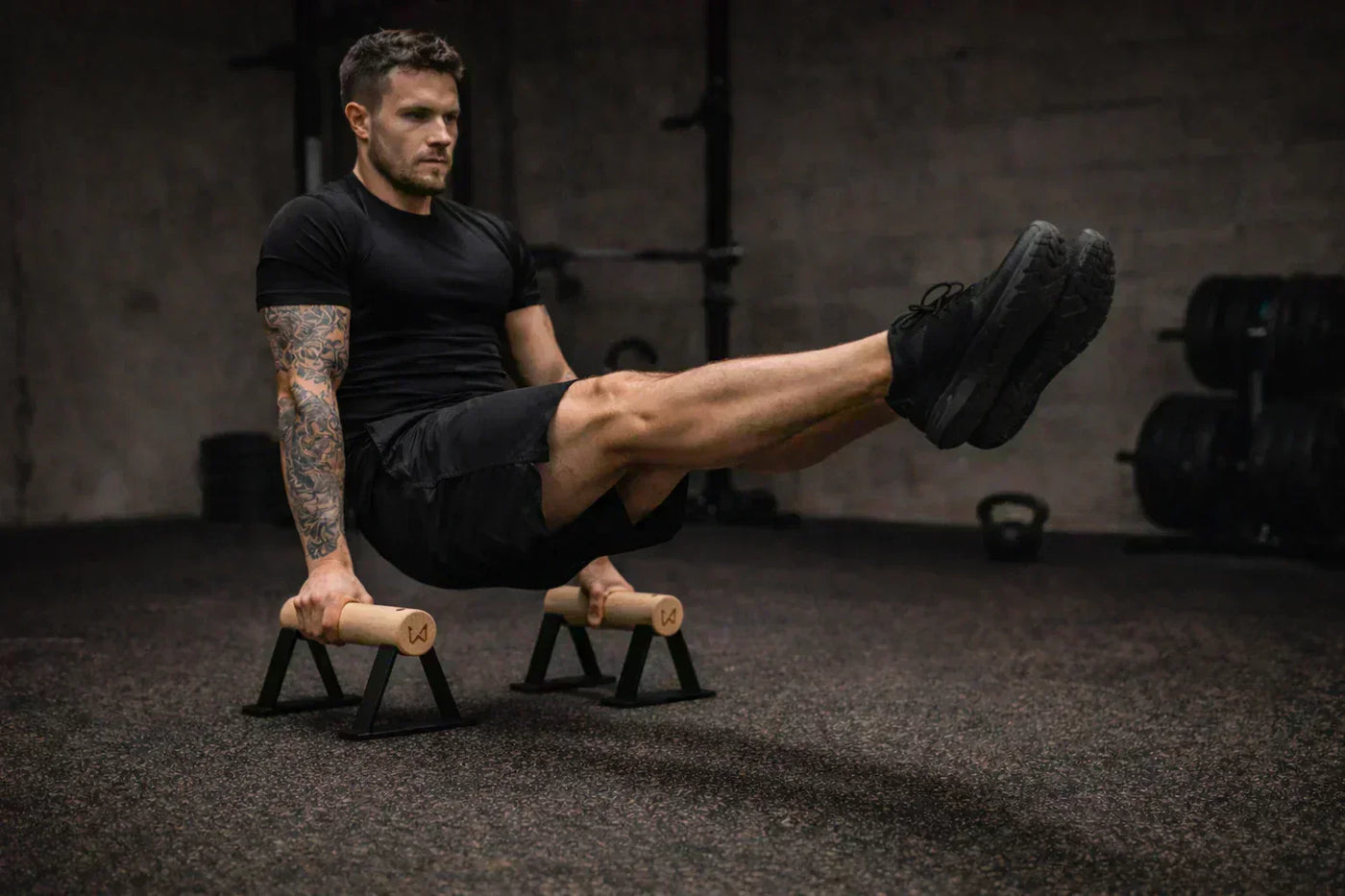
The L sit is one of the most well-known parallettes exercises and a powerful core movement. Sit between the bars and press down through your arms while lifting your legs forward so your body forms an L shape. Beginners should start with easier variations: keep the knees tucked close to the chest, extend one leg while keeping the other bent, or gradually increase hold time as strength improves. This exercise builds strong hip flexors and deep abdominal compression. Athletes doing daily L-sit work often find that wrist wraps help manage the cumulative load on the joints during longer training blocks.
Knee Raises on Parallettes

Knee raises are an excellent exercise for building core strength. Support your body on the parallettes with straight arms. From this position, lift your knees toward your chest while keeping your upper body stable. Slowly lower your legs back down with control before repeating. This movement mainly targets the lower abs and hip flexors.
Tuck Hold

The tuck hold is a great progression between the plank and the L sit. Press down through the parallettes and lift your feet off the ground while keeping your knees tucked close to your chest. Keep your shoulders slightly forward and your arms straight. Even holding this position for a few seconds can be challenging for beginners but builds excellent core and shoulder strength.
Leg Raises on Parallettes

Leg raises are a more advanced core exercise that requires strong abdominal control. Support your body on the parallettes and slowly raise your straight legs forward until they reach hip height or higher. Lower them back down in a controlled manner. Because your arms are supporting your bodyweight, the exercise challenges both the core and shoulder stability. Many athletes improve their grip during these holds by keeping their hands dry and maintaining consistent pressure through the bars.
Example Parallettes Core Workout
Perform the following circuit for three rounds:
- Plank hold – 20–30 seconds
- Knee raises – 8–12 repetitions
- Tuck hold – 10–15 seconds
- L sit hold – 8–15 seconds
Rest for about one minute between rounds. This short routine can easily be added at the end of a regular calisthenics session. For a full structured plan, see the Beginner Parallettes Workout.
Common Core Training Mistakes
One of the most common mistakes is relying too much on momentum instead of controlled movement. Another frequent issue is losing shoulder stability. Finally, many beginners underestimate isometric holds like the plank or L sit — they look simple but require strong, constant muscle tension to be effective.
How to Progress Your Core Training
As your strength improves, increase hold times, add more repetitions, or move to harder variations such as straight-leg L sits. For more ideas and detailed progressions, explore our 15 parallette exercises or the complete Parallettes Training Guide for Beginners.
FAQ
Are parallettes good for training abs?
Yes. Many parallettes exercises require strong abdominal engagement, especially L sits, knee raises, and leg raises.
Are parallettes core exercises suitable for beginners?
Absolutely. Most movements can be modified with easier variations such as bent knees or shorter hold times.
How often should I train core with parallettes?
Two to three sessions per week is usually enough to build strength while allowing proper recovery.
Do core exercises help improve calisthenics skills?
Yes. Strong core muscles help stabilize the body during push ups, handstands, and other balance-based exercises.
Building Strong Core With Parallettes
Developing core strength is essential for progressing in calisthenics. Parallettes provide a simple but highly effective way to challenge the abs while also improving stability and control. By practicing these exercises consistently, you can build a strong foundation that supports more advanced training in the future. If you're looking for quality equipment, see our best calisthenics parallettes in 2026 guide.


