
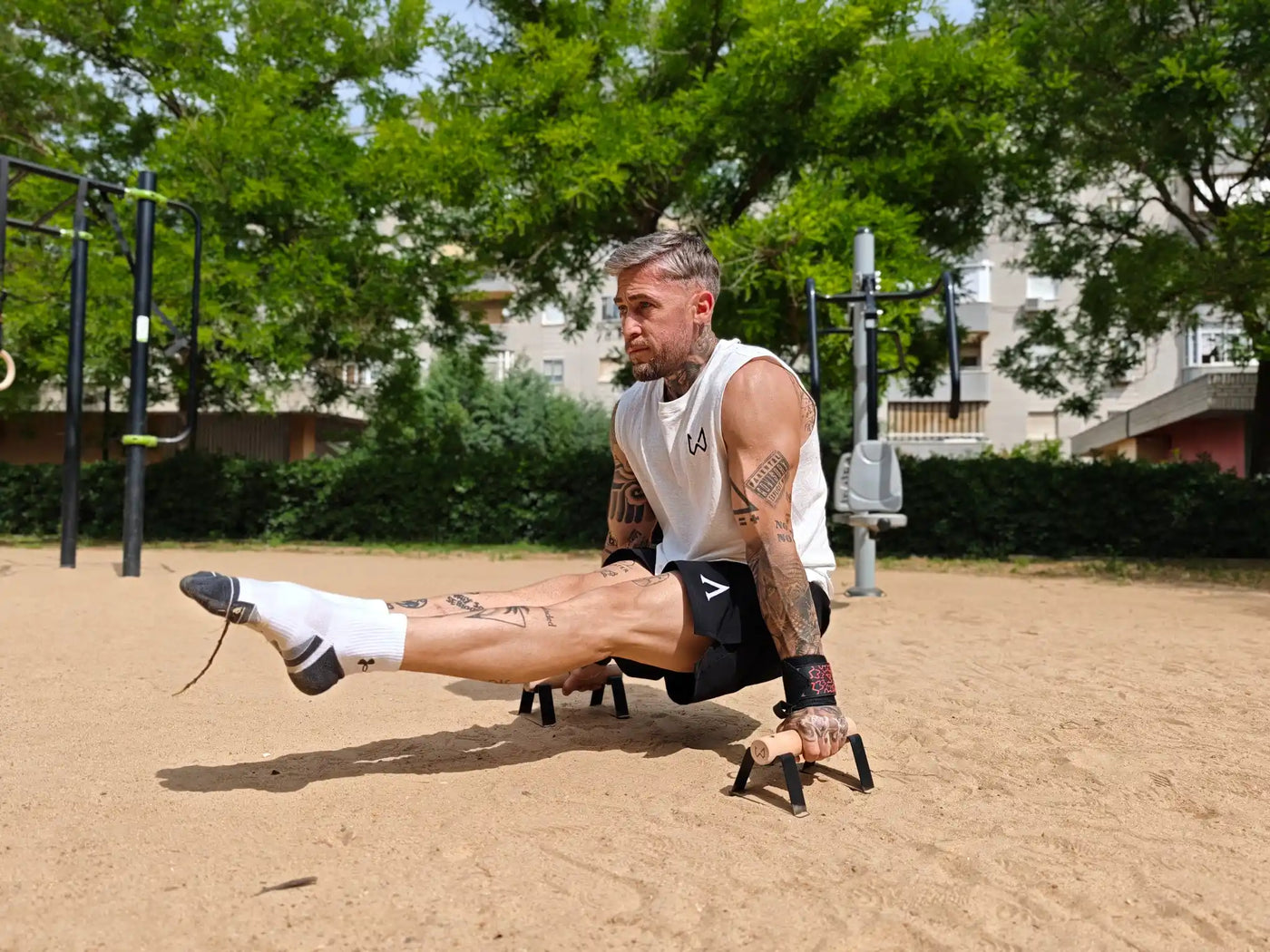

What makes calisthenics different
Calisthenics uses your body and gravity as the weight. Because you work with your own body, you naturally pay more attention to technique, alignment, and breathing. You learn to create tension from hands to feet instead of isolating a single muscle on a machine. Over time this builds strength, coordination, and posture that feel useful in daily life, not only in the gym.
- Train anywhere with a bar, rings, or bands
- Build balanced strength and joint control
- Learn skills that create natural milestones
- Develop focus and confidence as reps improve
New to this style? Start with the Beginners guide and learn the five key exercises.
Body benefits you feel quickly
Rows, push ups, hangs, squats, and hollow holds teach the body to move as one unit. Over time you gain useful strength, more mobility, and better posture.
- Strength and muscle through progressive angles, tempo, and assistance
- Shoulder and scapula control that improves alignment and posture
- Core tension that links upper and lower body for better control
- Mobility that transfers to everyday movements
Protect your joints with a quick prep from our warm up guide.

Mind benefits that last
Bodyweight training rewards consistency and attention. Progress shows up directly in your movement, like an extra clean rep, a smoother hang, or a deeper squat. Those small wins teach you that doing the right things often beats doing a lot once. Over time the same pattern of steady practice and feedback spills into work, sleep, and daily decisions.
- Focus and mindfulness from slow eccentrics and isometric holds
- Confidence and autonomy by mastering skills without complex machines
- Stress relief from rhythmic breathing and outdoor sessions
- Discipline built through milestones like your first pull up
Unsure how often to train? Here is a simple take on how many days to train.

The skill loop that keeps you coming back
Each skill has steps that trigger a positive loop: learn a step, feel a win, get motivated, repeat. This is powerful for both body and mind.
- Break one skill into small steps you can practice often
- Notice the first small change in control or range
- Write it down so the win does not disappear in your head
- Use that confidence to show up for the next small step
This loop applies to anything you train, from your first ring row to a solid L sit. If your main goal is pulling strength, you can follow our guides for the first pull up and increasing pull strength.

Why outdoor training feels different
Training outside adds light, fresh air, and space. You naturally breathe deeper and move more freely. Many people notice calmer moods and better sleep after a short park session.
Want a simple starting point? Try this first month plan you can do in any park.

Make it a habit in 20 minutes
Consistency is what changes both body and mind. Short twenty minute sessions reduce friction, fit next to work or family, and are easier to repeat than long perfect workouts. When you schedule two or three of these blocks per week and treat them like any other appointment, progress feels calm instead of chaotic.
| Day | Focus | Plan |
|---|---|---|
| Day A | Pull and core | Ring rows 4 x 8 to 12, banded pull ups 3 x 4 to 8, hollow hold 3 x 20 to 30 seconds |
| Day B | Push and balance | Push ups 4 x 8 to 12, pike or incline push 3 x 6 to 10, easy support hold on rings 3 x 15 to 20 seconds |
| Optional C | Mixed play | Light jogging to the park, short circuit of rows, squats, hangs, then stretch |
Before each session, follow the warm up guide to prep shoulders, wrists, and scapula.

Minimal gear, big return
You do not need a gym. A stable bar, a set of rings, and a couple of bands cover everything from beginner to strong intermediate.
- Gymnastic rings for rows, curls, and neutral pulls
- Resistance bands for assistance and shoulder prep
- Liquid chalk for confident grip without over squeezing

Common mistakes to avoid
| Mistake | Fix |
|---|---|
| Skipping warm up to save time | Use an 8 minute template to protect elbows and shoulders |
| Only chasing fatigue | Track form quality and angles, not just soreness |
| Ignoring pull push balance | Pair rows or pull ups with push ups or pike presses |
| Too many new skills at once | One main goal per cycle builds faster confidence |
Next steps
Pick one goal, plan two or three short sessions per week, and keep a simple log of sets and angles. Want a goal to focus your practice? Start with your first pull up or try normal to explosive push ups. If you are unsure where to begin, take the Free Level Test and browse the Beginners Collection.
FAQ
Is calisthenics good for mental health
Yes. The skill based structure creates frequent small wins, which boosts confidence, reduces stress, and improves focus.
Can I build muscle with bodyweight only
Yes. Use harder angles, slower eccentrics, and short rests. Rings and bands add progression without joint strain.
How many days per week should I train
Two or three non consecutive days are enough for most people. Add an easy outdoor session if you want more movement.
Do I need a gym to start
No. A bar, rings, and bands are enough to train anywhere and stay consistent.
What if my elbows or wrists feel tight
Short warm ups and neutral grips help. Follow our warm up guide before each session.
How long until I notice changes
Many feel better control within two to three weeks and see visible changes in four to eight weeks with steady practice and sleep.
Keep sessions simple, breathe, and stack small wins. Calisthenics will sharpen your mind and strengthen your body.


