
Perché iniziare con una routine strutturata
Allenarsi a caso porta risultati a caso. Una struttura semplice ti permette di ripetere lavoro di qualità e capire cosa sta migliorando. Tieni gli stessi cinque movimenti per un mese, segni serie e ripetizioni e progredisci solo quando le posizioni restano solide. Così eviti stalli e i fastidi ai tendini più comuni nei principianti.
Se vuoi capire meglio il percorso iniziale, dai un’occhiata alla guida calisthenics per principianti e poi valuta quante sedute ti stanno in settimana con quanti giorni allenare la calisthenics. Poi torna qui e metti tutto in pratica.
I 5 esercizi chiave
Ogni esercizio ha un compito preciso. Mantieni la tecnica pulita, usa assistenza quando serve e punta a serie fluide da 6 a 12 ripetizioni. Fermati 1 o 2 ripetizioni prima che la forma crolli.
1. Push up inclinati o sulle ginocchia
Focus: base della spinta, stabilità delle spalle, range completo. Appoggia le mani su una panca, un box o una parete per tenere le costole “giù” e una linea stabile. Scendi controllato, tocca leggero e risali fino a distendere senza alzare le spalle.
- Indicazioni: mani sotto le spalle, glutei attivi, costole giù.
- Obiettivo: 3 o 4 serie da 8 a 12 ripetizioni pulite.
- Progressione: abbassa l’inclinazione o passa al pavimento.
Quando i push up sono stabili, puoi vedere le progressioni in da push up normali a esplosivi.
2. Rematore alle anelli o sotto un tavolo
Focus: trazione orizzontale e controllo delle scapole. Metti gli anelli o un appoggio solido all’altezza dei fianchi. Mantieni una linea dritta dalla testa ai talloni. Tira portando i gomiti verso i fianchi mentre le scapole vanno indietro e in basso, poi ritorna con controllo.
- Indicazioni: collo lungo, petto “alto” ma costole dentro, stringi in alto.
- Obiettivo: 3 o 4 serie da 6 a 10 ripetizioni pulite.
- Progressione: corpo più orizzontale o pausa di 1 secondo in alto.
Per altre idee sulla trazione, vedi come aumentare la forza di trazione in calisthenics.
3. Hollow body hold
Focus: allineamento del core e tensione del “centro”. Sdraiati a pancia in su, spingi le costole basse verso il pavimento, solleva leggermente spalle e talloni e respira controllato. Se serve inizia in tuck. Regola semplice: la zona lombare resta a terra.
- Indicazioni: costole giù, glutei leggermente attivi, respira senza perdere tensione.
- Obiettivo: 3 o 4 serie da 15 a 30 secondi.
- Progressione: tuck, una gamba estesa, poi entrambe.
4. Trazioni assistite o con banda
Focus: trazione verticale, controllo del range e spalle “giù”. Usa una banda o un supporto con il piede per lavorare sul range completo senza dondolare. Pensa a petto su, costole dentro e gomiti che scendono. Pausa morbida in alto e discesa controllata.

Non sai come scegliere la tensione della banda? Leggi la guida completa alle bande.
- Indicazioni: spalle giù, niente slancio con le gambe, gomiti fluidi.
- Obiettivo: 3 a 5 serie da 4 a 8 ripetizioni controllate.
- Progressione: banda più leggera, poi negative, poi senza assistenza.
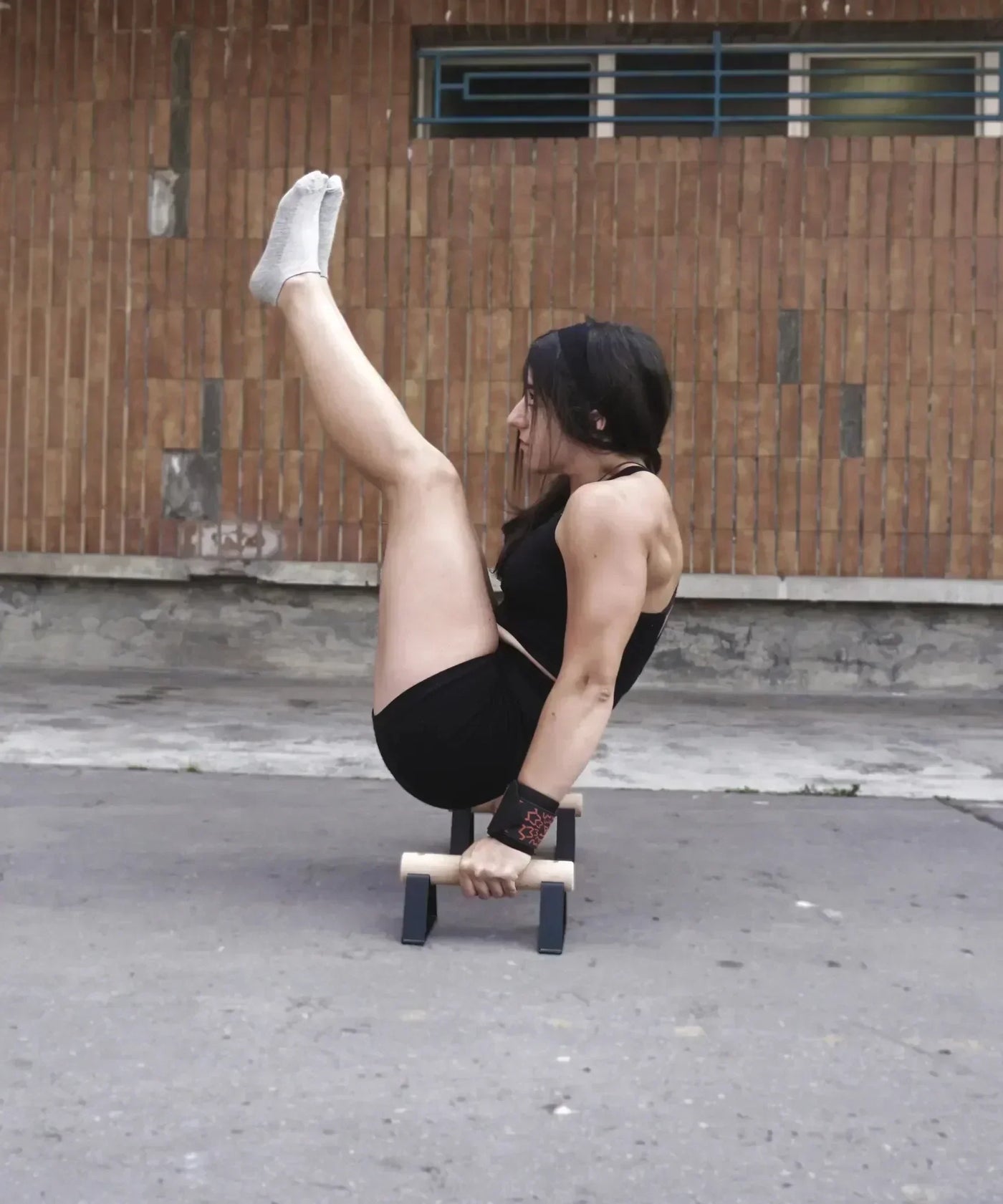
5. Supporto alle parallele o supporto per dip
Focus: depressione scapolare, stabilità delle spalle e base per i dip. Tieni il supporto su parallele o anelli con gomiti distesi, spalle attive verso il basso e costole “impilate”. Corpo fermo. Aumenta il tempo con calma.

Vuoi altre idee di pratica “da terra”? Usa 15 esercizi importanti con le parallettes come ispirazione.
- Indicazioni: spingi alto, collo lungo, niente spalle alle orecchie.
- Obiettivo: 3 a 5 serie da 10 a 30 secondi.
- Progressione: più tempo o transizioni lente e controllate.
Esempio di programma settimanale
Allenati due o tre giorni a settimana e ripeti la stessa struttura per quattro settimane. Lascia sempre 1 o 2 ripetizioni in riserva. Se la qualità scende, riduci un po’ il volume nella seduta successiva e riparti. Se non sei sicuro della frequenza, vedi quanti giorni allenare la calisthenics.
| Sessione | Lavoro principale | Accessori | Note |
|---|---|---|---|
| A | Push up inclinati 4 x 8 a 12 Rematore agli anelli 4 x 6 a 10 |
Hollow hold 3 x 20 s | Riscalda prima. Fermati con ripetizioni pulite in riserva. |
| B | Trazioni assistite 4 x 4 a 8 Supporto 4 x 15 a 25 s |
Hollow hold 3 x 20 s | Controlla la discesa. Niente dondolio. |
| C (opzionale) | Ripeti A o B con un po’ meno volume | Mobilità leggera e lavoro scapole | Giorno opzionale, resta “fresco”. |
Errori comuni dei principianti
Andare troppo di fretta
Le varianti più difficili non aiutano se la posizione crolla. Prima domina l’angolo facile. La qualità è la scorciatoia. Per strumenti semplici che ti aiutano a progredire con calma, vedi attrezzatura base per calisthenics.
Saltare il riscaldamento
Cinque minuti di lavoro con bande e scapole rendono ogni ripetizione migliore. Usa la guida al riscaldamento per calisthenics come riferimento semplice.
Volume incoerente
Scrivi serie, ripetizioni e una nota corta sulla tecnica. Ripeti il piano per un mese. Per una visione più completa dell’inizio, vedi primo mese di calisthenics.
Attrezzatura minima per iniziare
Puoi fare quasi tutto con una panca e una sbarra. Però alcuni piccoli strumenti rendono tutto più semplice. Un kit come il Calisthenics Starter Set tiene tutto in ordine a casa, e la nostra collezione per principianti raggruppa l’essenziale.
Preferisci scegliere pezzo per pezzo? Prova wrist wraps per spinta più stabile, una corda per riscaldarti e il magnesio liquido per un grip affidabile all’aperto.

Se ti alleni al parco, potrebbe piacerti anche calisthenics portatile e i nostri consigli su come scegliere parallettes di qualità.
Prossimi passi
Segui questo piano per quattro settimane. Quando le ripetizioni sono pulite e le tue note mostrano più controllo, puoi aumentare la difficoltà con calma.
- Verifica il tuo livello con il test di livello calisthenics.
- Scegli un obiettivo chiaro come la prima trazione oppure inizia la preparazione ai dip agli anelli.
FAQ
Quante volte a settimana devo fare questa routine
Due o tre sedute a settimana bastano. Tieni almeno un giorno di riposo tra le giornate più dure, così muscoli e articolazioni si adattano senza irritarsi.
Quando passare a versioni più difficili
Quando tutte le serie restano pulite e hai ancora 1 o 2 ripetizioni in riserva. Cambia una cosa alla volta, per esempio meno inclinazione o una banda più leggera.
Posso combinarla con allenamenti in palestra
Sì. Usa questa routine come pratica tecnica e riduci un po’ il volume in palestra per recuperare bene. L’obiettivo è qualità costante, non stanchezza continua.
E se non ho gli anelli
Usa un tavolo robusto per i rematori e parallele o due box stabili per i supporti. Conta più la stabilità e il controllo che lo strumento preciso.
Quanto tempo serve per vedere risultati
Molti principianti sentono più controllo in due settimane e vedono miglioramenti chiari entro la quarta settimana, se restano costanti, curano la tecnica e dormono a sufficienza.


